NVIDIA RTX Spark Compact Desktops: Specs, Pricing, 128GB
NVIDIA RTX Spark compact desktops from ASUS, Dell and MSI went on sale on November 18, 2026, according to NVIDIA's official blog. The systems pair a 20-core NVIDIA Grace CPU with a Blackwell RTX GPU with 6,144 CUDA cores and up to 128GB of unified memory, and NVIDIA puts AI performance at up to 1 petaflop. The pitch is specific: a dedicated Windows PC that keeps local AI agents, scheduled tasks, image and video generation and model fine-tuning running around the clock, even while a laptop travels or does other work.
That framing matters more than the spec sheet. RTX Spark laptops from six makers went on sale on October 16 starting at $2,599, and they already offered the same silicon in a portable form. The compact desktop turns the platform into a fixed appliance. A machine that never leaves the desk, never sleeps for travel and never competes with the owner's main work is a different product category, closer to a home server with a serious GPU than to a small PC. NVIDIA is effectively selling the always-on agent host as a retail category.
Models On Sale and Models Still Coming
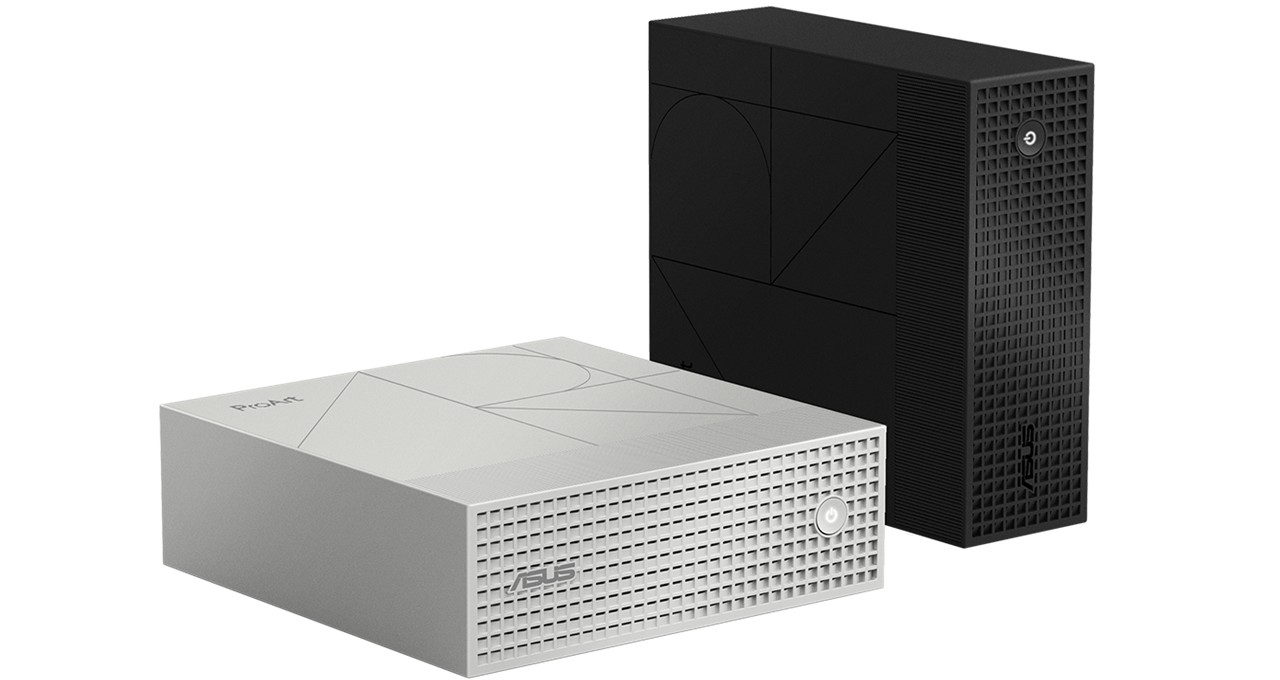
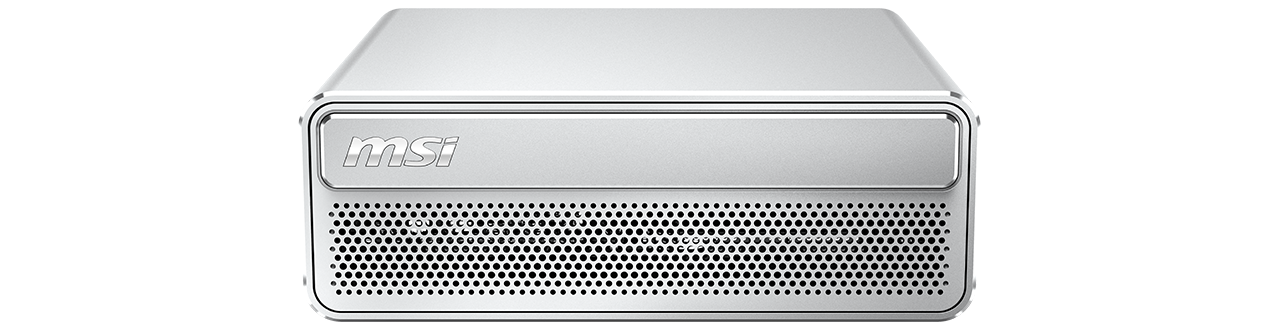
The named hardware so far is the ASUS ProArt GR1X mini PC and the MSI EdgeMesa N AI+ series. ASUS says the GR1X ships in 64GB and 128GB configurations, measures 150 x 150 x 51 mm and weighs 1.48 kg, which is small enough to sit behind a monitor. NVIDIA lists Dell as a seller from day one but did not name the Dell model in its post, a gap worth noting for anyone trying to compare the launch lineup model by model.
Still listed as coming soon are mini PCs from Acer, GIGABYTE and HP, plus the Microsoft Surface RTX Spark Dev Box. That split is normal for a platform launch, but it means the November 18 date is the start of availability rather than a full lineup. Buyers who want the Surface Dev Box or an HP or Acer variant are still waiting, and NVIDIA gave no dates for those systems in the post.
Specifications and What 128GB of Unified Memory Buys
The headline capability claims follow directly from the memory figure. NVIDIA says these systems can run 120-billion-parameter large language models locally, render 3D scenes larger than 90GB in real time and edit 4:2:2 video in real time, with 10-gigabit Ethernet for moving large datasets and model files. Unified memory is the reason a compact box can attempt the first two at all. A discrete GPU with 24GB or 32GB of VRAM cannot hold a 120B model or a 90GB scene, while a 128GB unified pool can, at the cost of sharing that pool with the CPU and the operating system.
Two cautions belong next to those numbers. First, every figure in this section is an NVIDIA published value. The 1 petaflop rating and the 120B local run have no independent measurements published yet, and the precision and quantization behind the petaflop figure are not stated in the blog post. Second, running a 120B model and running it fast are different claims. Memory capacity decides whether the model loads, while memory bandwidth decides token speed, and NVIDIA's post does not give a tokens per second figure for that workload. The honest reading is that the capacity claim is concrete and checkable, and the speed story is still unmeasured.
Pricing and the Cost Comparison That Matters
NVIDIA did not publish a per model price list. Reporting by Gizmodo, citing NVIDIA, put the ecosystem starting price at about $4,400. That is an ecosystem floor, not a sticker price for the GR1X or the EdgeMesa, and the 128GB configurations will sit above it. Anyone budgeting for a specific model needs the retailer listing, because memory configuration is exactly where these prices will spread out.
Even as a floor, $4,400 frames the real comparison. The alternative to an always-on local agent host is cloud inference billed per token, month after month, or a workstation GPU build that costs more and draws more power. A dedicated local box only pays for itself if the agent workload is genuinely continuous. For a developer who runs agents overnight and fine-tunes models weekly, the arithmetic can work. For occasional chat use, a $2,599 RTX Spark laptop or a cloud subscription is the cheaper tool, and the desktop's always-on advantage goes unused.
Software Arriving With the Desktops
NVIDIA bundled three software updates into the same announcement. NVIDIA Switchyard is now available in Hermes, routing agent tasks automatically between local and cloud models so routine work stays on device and harder reasoning goes to the cloud. Blender 5.3 adds DLSS Ray Reconstruction to the Cycles viewport, giving near final quality ray traced previews while artists work instead of a noisy resolving image. Adobe Substance 3D Painter 12.2 starts a native Arm public beta, the first version that runs on RTX Spark without a compatibility layer.
The Switchyard piece is the strategically important one. A local first agent stack that can escalate to cloud models per task answers the obvious objection to local hardware, that a 120B local model is not a frontier model. With routing in place, the desktop does not need to win every task. It needs to absorb the high volume routine tasks cheaply and hand off the rest, which is also how the hardware cost gets justified in practice. NVIDIA also notes native CUDA support and Linux development through Windows Subsystem for Linux, plus fine-tuning with Unsloth, so the box is positioned as a development machine and not only an inference appliance.
Limits and Unconfirmed Points
- All performance figures are NVIDIA claims: the 1 petaflop rating, the 120B local model run and the 90GB scene rendering have no independent benchmarks published yet.
- No per model pricing: NVIDIA published no price list. The roughly $4,400 starting figure is reporting that cites NVIDIA and covers the ecosystem, not a specific model.
- The Dell model is unnamed: NVIDIA lists Dell as an on-sale seller but did not name its model in the announcement.
- Half the lineup is still pending: Acer, GIGABYTE, HP and the Microsoft Surface RTX Spark Dev Box have no availability dates in the post.
- Not DGX Spark: despite the similar name, DGX Spark is a separate product line, and specs or pricing from that line do not carry over.
None of that undermines the launch itself. ASUS, Dell and MSI systems can be bought today, the specifications are published, and the category, a dedicated always-on local agent PC, now has retail hardware with a concrete price floor. What remains open is measurement: independent reviews will decide whether the 128GB pool delivers usable speed on the workloads NVIDIA lists.
FAQ
Which RTX Spark compact desktops are on sale now?
Systems from ASUS, Dell and MSI went on sale on November 18, 2026. Named models include the ASUS ProArt GR1X mini PC and the MSI EdgeMesa N AI+ series, while mini PCs from Acer, GIGABYTE and HP and the Microsoft Surface RTX Spark Dev Box are still listed as coming soon.
What are the RTX Spark desktop specifications?
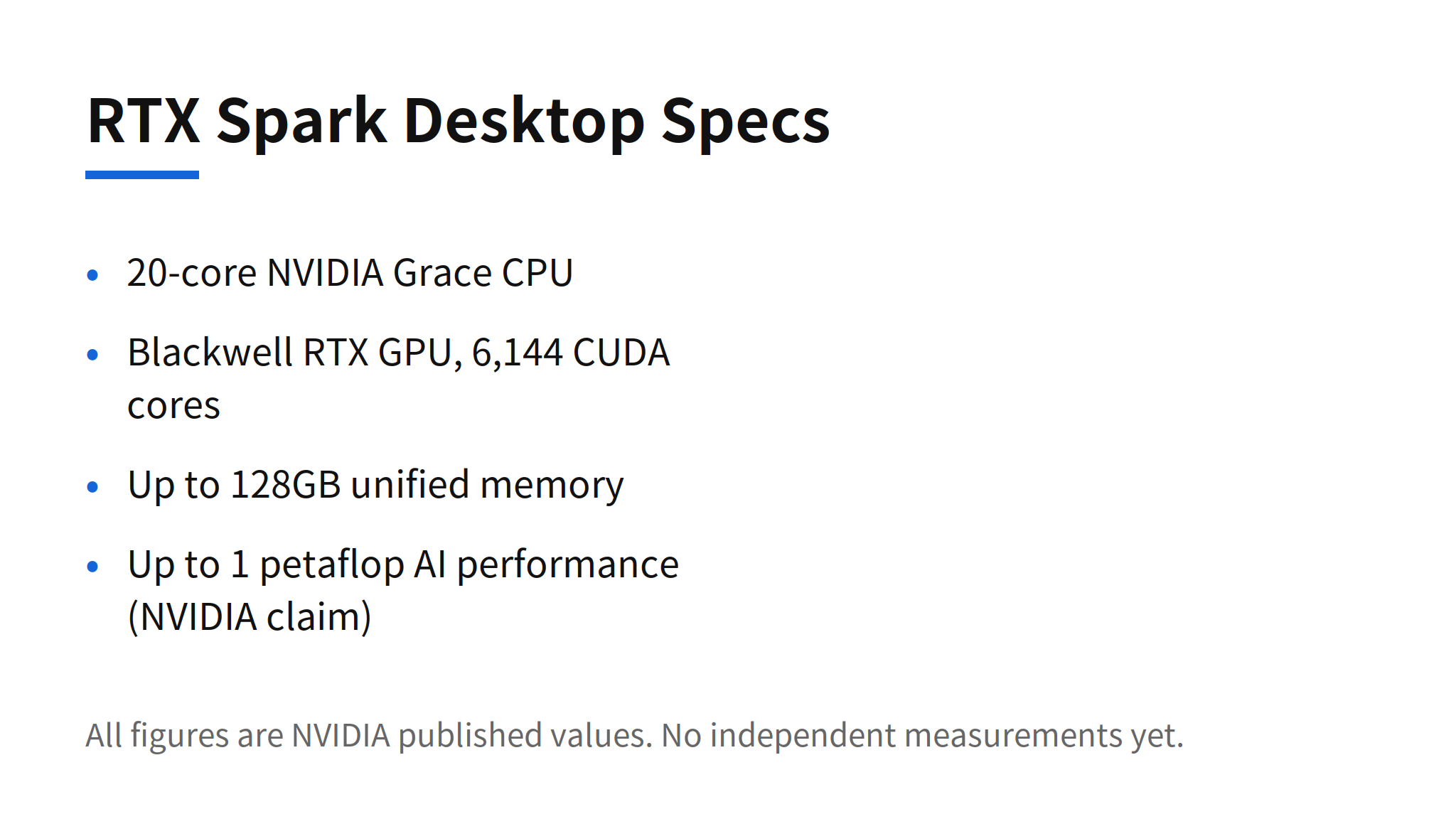
The platform pairs a 20-core NVIDIA Grace CPU with a Blackwell RTX GPU with 6,144 CUDA cores, up to 128GB of unified memory and 10-gigabit Ethernet. NVIDIA puts AI performance at up to 1 petaflop.
How much do RTX Spark compact desktops cost?
NVIDIA did not publish a per model price list. Reporting citing NVIDIA put the ecosystem starting price at about $4,400, so the actual price of a specific model and memory configuration needs checking at the retailer.
What can an RTX Spark desktop run locally?
NVIDIA lists running 120-billion-parameter large language models locally, rendering 3D scenes larger than 90GB in real time and editing 4:2:2 video in real time. These are NVIDIA published claims with no independent measurements published yet.
How is this different from RTX Spark laptops and DGX Spark?
RTX Spark laptops from six makers went on sale on October 16, 2026 starting at $2,599. The compact desktops use the same platform in a dedicated, always-on form factor. DGX Spark is a separate product line despite the similar name.
Related Reading
- NVIDIA Vera Rubin MLPerf Training Results, the data center end of the same Blackwell generation
- NVIDIA GR00T 2 Release: Performance, Data and How It Works, another NVIDIA platform built around local model deployment