NVIDIA GTC Berlin Open Models: Six Families, Open Weights
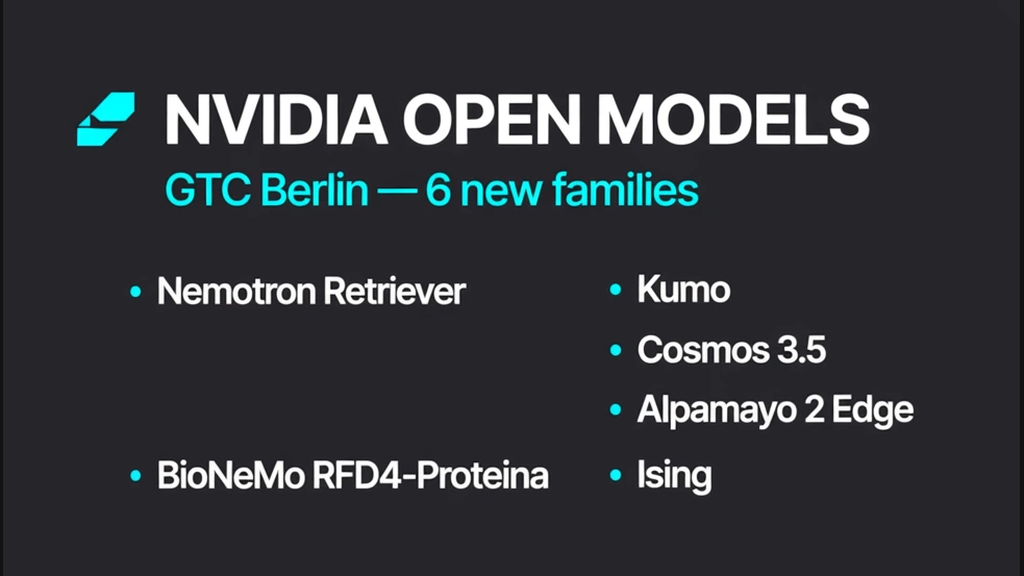
The Core: Open Models in Six Fields in a Single Announcement
- At GTC Berlin, NVIDIA announced an expansion of its open model portfolio on its official blog, spanning language, robotics, biology, and quantum computing. The blog post is dated October 21, 2026.
- The bundle has six entries: Nemotron Retriever, Kumo, Cosmos 3.5, Alpamayo 2 Edge, BioNeMo RFD4-Proteina, and Ising. It is the second wave after the October 15 Nemotron 3.5 announcement.
- The framing of this release is Europe's sovereign intelligence. Unlike the October 15 announcement, this one leads with an open model bundle. Companies and research institutes in each country can customize it on their own data. They can deploy it on their own infrastructure.
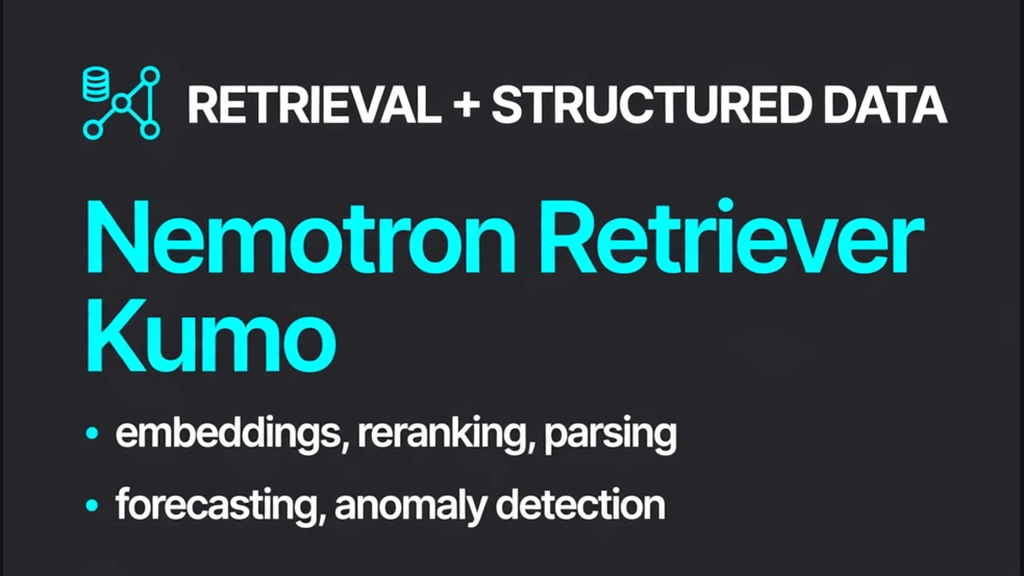
Retrieval and Structured Data: Nemotron Retriever and Kumo
- Nemotron Retriever is a new model family for embedding, reranking, and document parsing. It is offered through Hugging Face, partner platforms, and NIM microservices on build.nvidia.com. It sits where it can replace the retrieval layer of a RAG pipeline wholesale.
- Kumo is an open-weight foundation model, library, and toolset for structured business data. It provides prediction, forecasting, and anomaly detection models, and organizations can fine-tune it on their own data.
- Kumo Structured is on Hugging Face, and the Kumo Engine (the open library stack) is on GitHub. Cognite, Coinbase, Databricks, DoorDash, Revolut, and Tubi use Kumo, and Snowflake customers also use Kumo for advertising, energy, finance, and retail AI development.
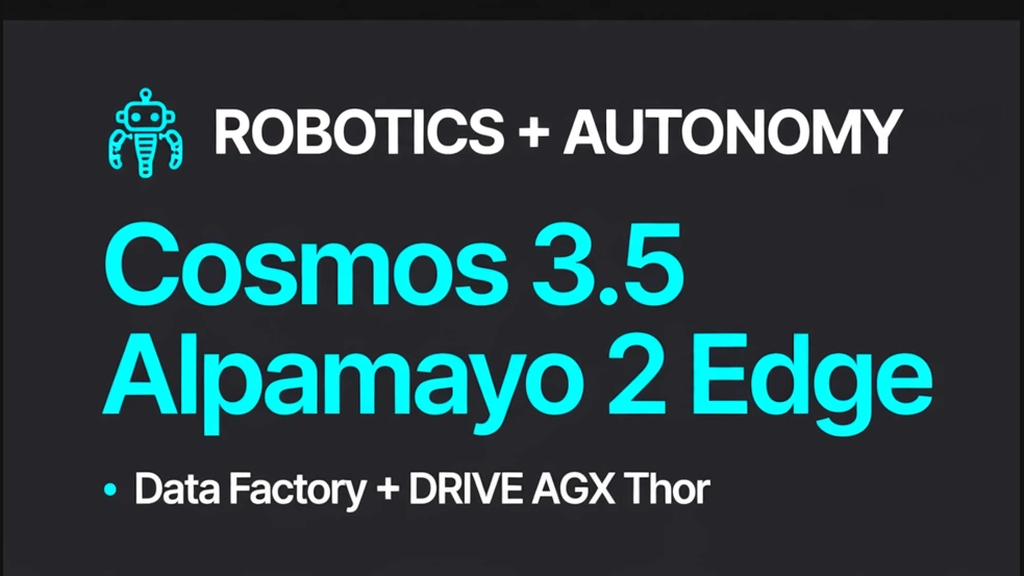
Robotics and Autonomy: Cosmos 3.5 and Alpamayo 2 Edge
- Cosmos 3.5 is a world model for robotics, autonomous driving, and vision agents. The newly introduced Cosmos Data Factory (a blueprint plus core agent skills) supports curation, labeling, generation, and evaluation of data for driving scenarios, product defects, image augmentation, and event generation.
- Porsche (with Voxel51), ANYbotics (with Encord), Zalando, CEVA Logistics (with Sereact), and Siemens use Data Factory. Cosmos is offered openly on Hugging Face, GitHub, and some inference partners.
- Alpamayo 2 Edge is a compact reasoning model for real-time in-vehicle scene understanding and motion planning. It uses the Nemotron-based foundation of Cosmos 3 Edge and is optimized for NVIDIA DRIVE AGX Thor. Downloads on GitHub and Hugging Face are scheduled within the month.
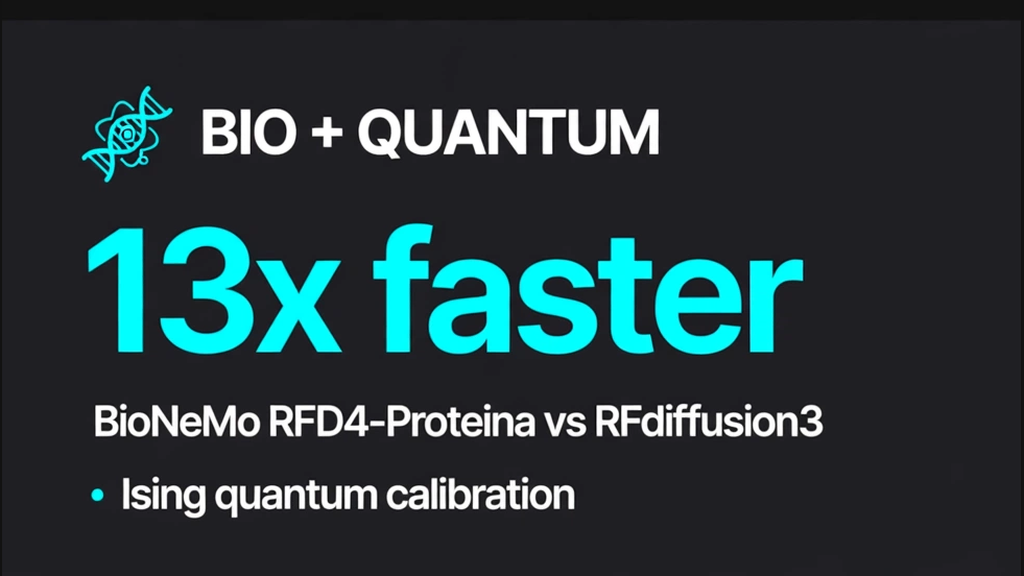
Biology and Quantum: BioNeMo RFD4-Proteina and Ising
- BioNeMo RFD4-Proteina is an open protein design model from NVIDIA and the Institute for Protein Design at the University of Washington (the Baker Lab). It generates protein sequences and 3D structures, claims top performance on more than 10 protein design tasks. It claims to generate designs roughly 13x faster than RFdiffusion3 on a 200-amino-acid protein benchmark. It is available on build.nvidia.com, as a NIM, on GitHub, and on Hugging Face.
- Ising is an open model family for quantum supercomputer development, covering everything from real-time hardware calibration to error correction. IQM Quantum Computers uses it for quantum processor calibration, SEEQC combines NVQLink with Ising, and AWS integrates Ising into the AWS Parallel Computing Service.
- Separately, the Nemotron 3.5 Bolt E4B 4GB is scheduled for release on Friday, October 23. Nemotron builds on data and research from the Nemotron Coalition, which includes Black Forest Labs, H-Company, and Mistral.
Background: The Second Wave After October 15, Framed as Sovereign AI
This is the second wave after the October 15 announcements of Nemotron 3.5 Super VL 120B and Bolt 74B-A9B (related issue #3278). Where October 15 was about large language models themselves, this announcement widens the field to retrieval, structured data, robotics, biology, and quantum. It is a portfolio expansion. The common denominator is open weights and self-deployment. For teams aiming at on-device or on-premises deployment, this bundle becomes a practical menu.
Why It Matters: Three Direct Connections to AX Practice
A RAG retriever (Nemotron Retriever), structured-data prediction (Kumo), and robotics simulation (Cosmos 3.5 plus Data Factory) are all downloadable as open weights and usable immediately. Kumo in particular connects directly to AX work where agents handle enterprise table data. Cosmos Data Factory connects to robotics data pipelines. These are working assets rather than announcements alone.
Undisclosed Points and Open Questions
- Per-model license terms undisclosed: the blog carries no open-weight wording or detailed usage conditions.
- The task list and evaluation method behind the "top performance on 10+ tasks" claim are undisclosed.
- What specifically changed in Cosmos 3.5 versus Cosmos 3 is undisclosed.
Sources
- NVIDIA official blog: open model portfolio expansion (October 21, 2026)
- AI Affairs summary (October 21, 2026)
- ax-trend issue #3386
- Related issue #3278: NVIDIA releases Nemotron 3.5 Super VL 120B and ships Bolt 74B-A9B
- Related issue #3234: NVIDIA announces the software ecosystem ahead of the RTX Spark launch
- Related issue #3320: NVIDIA RTX Spark laptops actually ship: ASUS, Dell, HP
- Related issue #944: NVIDIA releases Cosmos 3, a physics-based world model
FAQ
Which models did NVIDIA announce at GTC Berlin?
NVIDIA announced six additions to its open model portfolio on its official blog, dated October 21, 2026: Nemotron Retriever, Kumo, Cosmos 3.5, Alpamayo 2 Edge, BioNeMo RFD4-Proteina, and Ising. The framing of the release is Europe's sovereign intelligence. Companies and research institutes in each country can customize the models on their own data and deploy them on their own infrastructure.
What is Kumo for?
Kumo is an open-weight foundation model, library, and toolset for structured business data. It provides prediction, forecasting, and anomaly detection models, and organizations can fine-tune it on their own data. Cognite, Coinbase, Databricks, DoorDash, Revolut, and Tubi use Kumo.
How fast is BioNeMo RFD4-Proteina?
BioNeMo RFD4-Proteina claims to generate designs roughly 13x faster than RFdiffusion3 on a 200-amino-acid protein benchmark. It also claims top performance on more than 10 protein design tasks. The task list and evaluation method behind the top performance claim are undisclosed.
Are the license terms for the six model families public?
No. Per-model license terms are undisclosed, and the blog carries no open-weight wording or detailed usage conditions. What specifically changed in Cosmos 3.5 versus Cosmos 3 is also undisclosed.