Google Stitch Loop Release: 24/7 Product Agent, Waitlist
Google Labs announced Stitch Loop on November 18, 2026, describing it as a long-running product agent that connects to your codebase and live metrics to continuously improve what you have shipped. It works 24/7, and it keeps watching after a goal is met in case the metric slips again. The waitlist opened the same day for users globally, with eligible Google AI Ultra users getting priority access at stitch.google.com/loop/waitlist.
The premise targets a gap that coding agents leave open. A coding agent usually finishes when a pull request merges, while the work that follows is patching vulnerabilities, speeding up checkout and diagnosing signup drop-offs hidden in noisy feedback. Google frames Stitch as the tool that turned ideas into working interfaces, and Stitch Loop as the step that takes on continuous optimization after launch. That is a different claim from faster code generation, and it should be judged on different evidence.
How a Loop Cycle Works
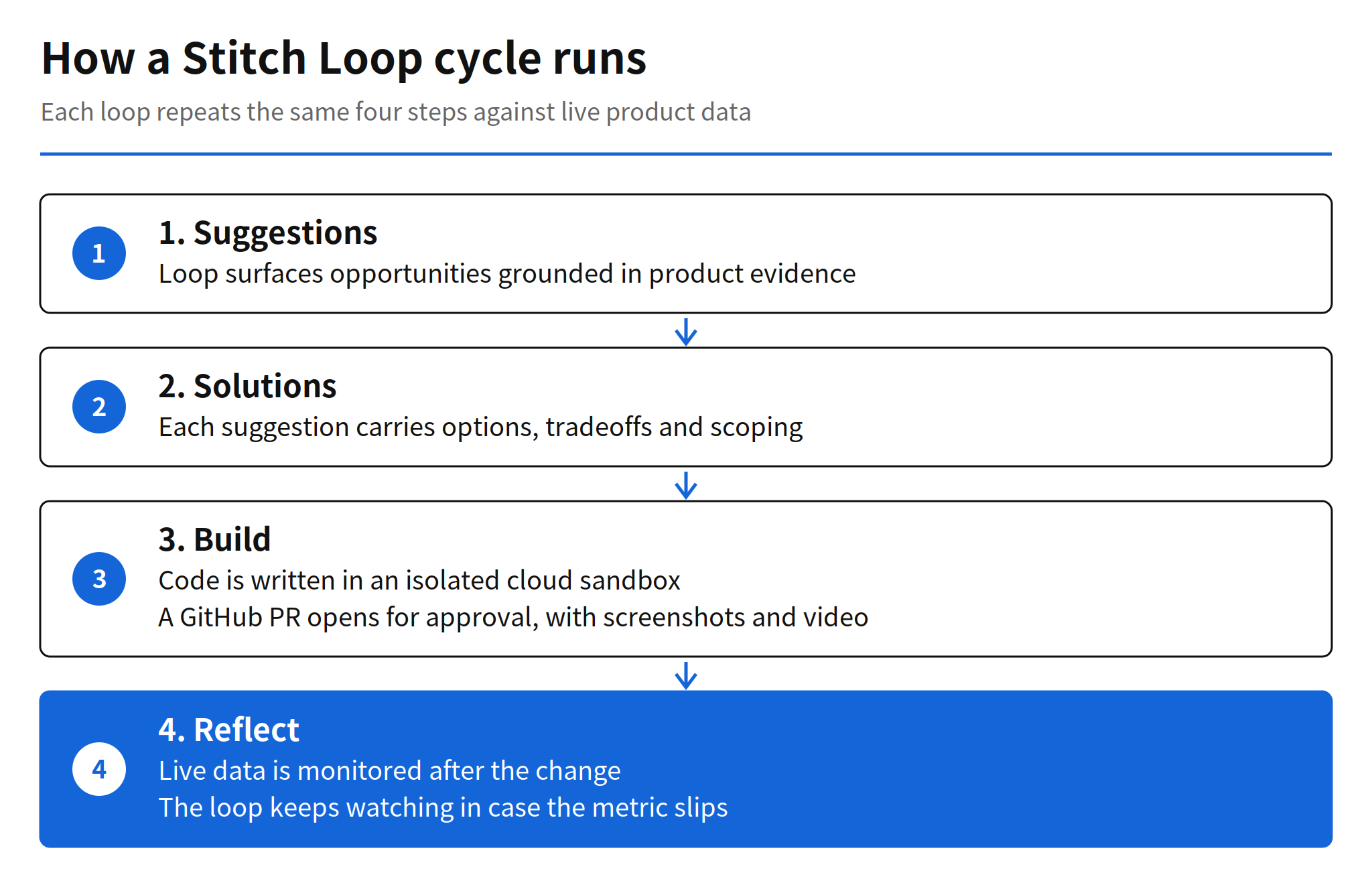
Setup starts with connection. A team connects GitHub and product context such as logs, user behavior and feedback, through more than 180 integrations, custom MCP servers or local CLI uploads. Each loop then runs four steps. First, suggestions surface opportunities grounded in evidence from the product. Second, each suggestion comes with one or more solutions, with tradeoffs and scoping, plus visual design options where they apply. Third, once a direction is chosen, the build step writes code in an isolated cloud sandbox and opens a GitHub pull request for approval, adding screenshots and videos of the work when relevant. Fourth, the reflect step monitors live product data, learns from positive and negative results, and keeps watching after the goal is met.
The control point is explicit in the announcement: nothing merges until you review the pull request. That makes the current product a supervised loop rather than a fully autonomous one. The autonomy question is therefore narrower than the marketing suggests. The open question is how good the suggestions and the proposed fixes are, because a human still stands at the merge gate.
Default Loops and the Security Loop
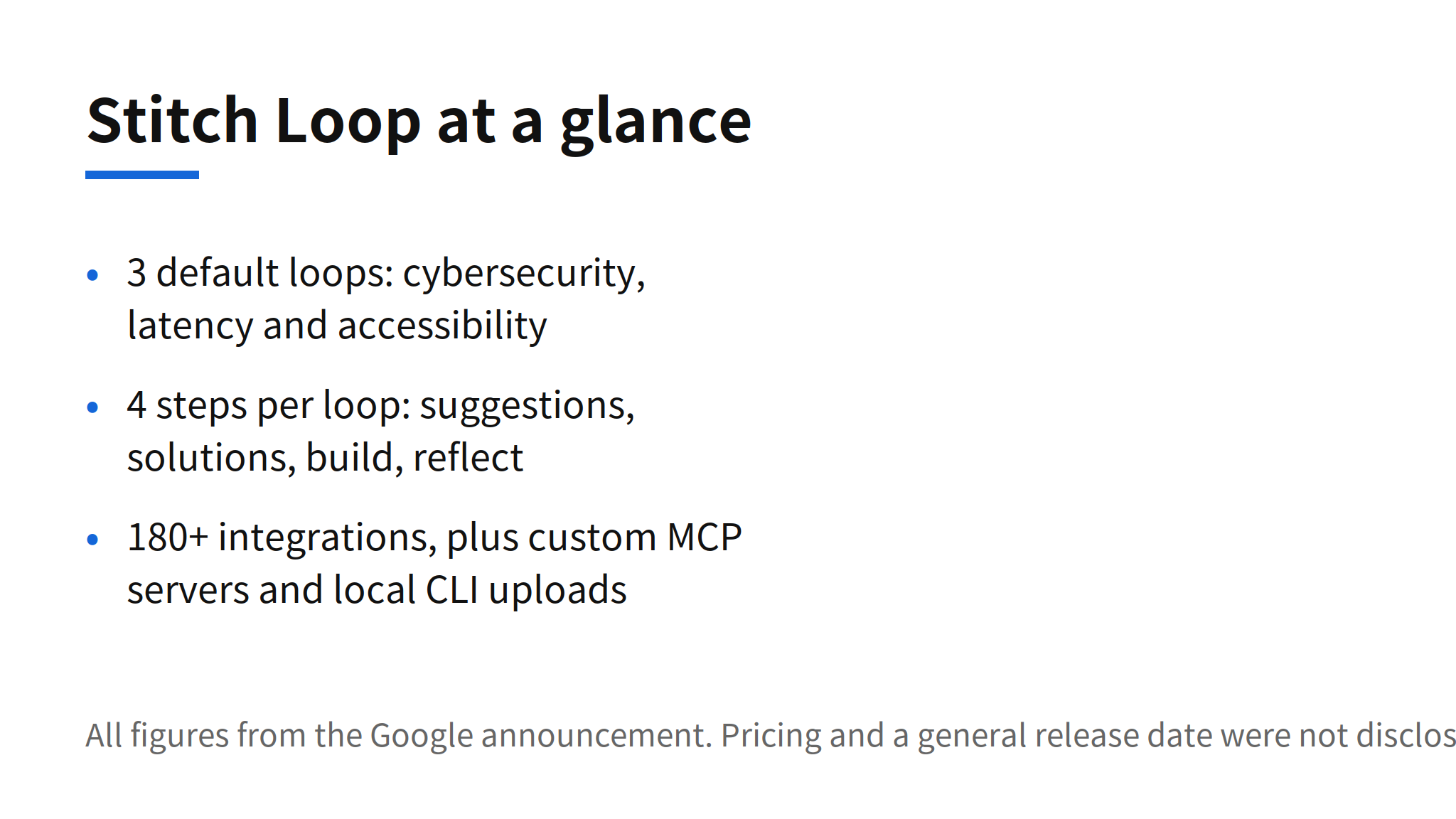
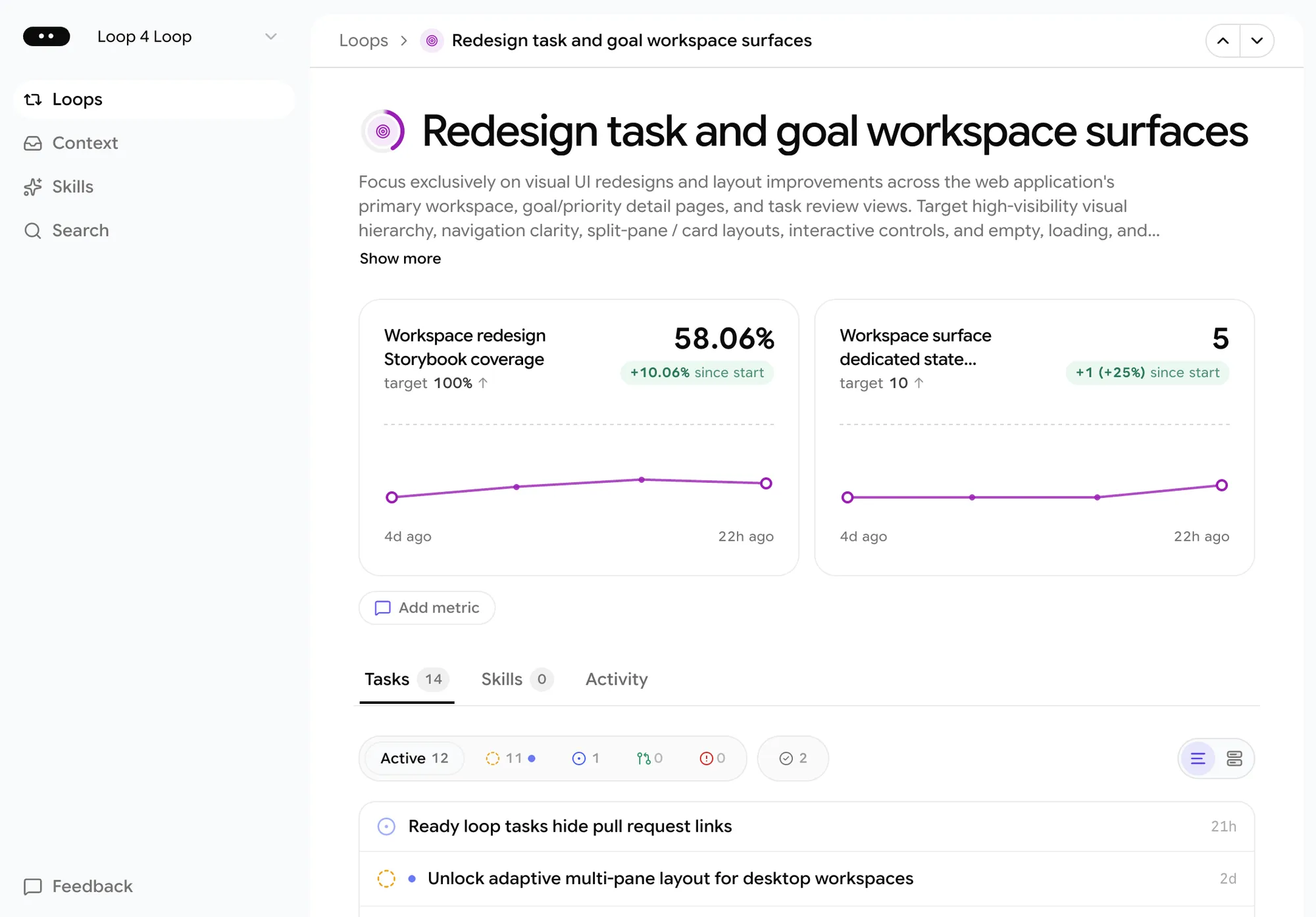
Three loops ship by default, for cybersecurity, latency and accessibility, and teams can add their own at any time. Google gives improving checkout conversion as the example of a custom loop, which shows the intended range: a loop is a standing goal tied to a measurable outcome, not a one-off prompt.
The security loop gets the most detail in the announcement. It pairs Gemini 4 Carbon cybersecurity capabilities with CodeMender, described by Google as a Google DeepMind autonomous agent that improves code security. Together they scan a codebase for vulnerabilities, flag each issue with evidence and open a pull request with a proposed fix for review. For lean teams, security is the gap Google singles out, and it is also the loop where a false positive rate would matter most. Google published no detection accuracy figures, so that part remains unverified until independent use reports appear.
Use With Other Agents and in Slack
Stitch Loop is also positioned as a service layer for other coding agents, with Google Antigravity named as an example. Any coding agent a team prefers can pull persistent product context from Stitch Loop through the Stitch CLI and MCP, which Google says can power mixed-model setups and autonomous improvements inside an existing workflow. In Slack, teams can mention @stitch to receive daily insight digests and create new loops.
This context layer may be the more durable part of the launch. Coding agents are interchangeable in a way that accumulated product context is not. Logs, behavior data, feedback and the history of what a loop tried and learned are what make the next suggestion specific to one product. If that context stays portable through CLI and MCP, teams can change agents without losing it. If it does not, Stitch Loop becomes another place where product knowledge gets locked in, and the announcement does not settle which of those two outcomes applies.
Limits and Unconfirmed Points
- No pricing and no release date: Google disclosed neither. Access is waitlist only, with priority for eligible Google AI Ultra users.
- No effectiveness numbers: the announcement contains no benchmarks or measured improvement results for the security, latency or accessibility loops, and no detection accuracy for the security loop.
- Autonomy level is unconfirmed: the only confirmed control is human review before a pull request merges. How far a loop runs on its own before that point is not specified.
- The integration list is not published: Google states more than 180 integrations without listing them in the post, so coverage for a specific stack cannot be checked yet.
None of that cancels the significance of the direction. The agent competition is moving from writing new code toward operating shipped products, and Stitch Loop packages that shift as a concrete workflow: connect context, run standing loops, build in a sandbox, and hand a human a pull request. Whether it earns a place in a team will depend on evidence Google has not published yet, namely how often its suggestions are right and how much review time its pull requests actually save.
FAQ
What is Google Stitch Loop?
Stitch Loop is a long-running product agent from Google Labs, announced on November 18, 2026. It connects to a codebase and live product metrics and works 24/7 to improve a shipped product toward measurable goals.
How does a Stitch Loop cycle work?
Each loop runs four steps: suggestions grounded in product evidence, solutions with tradeoffs and scoping, a build step that writes code in an isolated cloud sandbox and opens a GitHub pull request, and a reflect step that monitors live data and keeps watching after the goal is met.
Which loops are included by default?
Three default loops cover cybersecurity, latency and accessibility. Teams can add custom loops, such as one aimed at improving checkout conversion.
How can teams join Stitch Loop and what does it cost?
The waitlist opened globally on November 18, 2026 at stitch.google.com/loop/waitlist, with eligible Google AI Ultra users getting priority access. Google has not disclosed pricing or a general release date.
Related Reading
- Google Opens Antigravity /teamwork: Proofs and Rust Gains, the coding agent Google names as a Stitch Loop consumer
- Antigravity Remote Agents: Cloud Coding Sessions, Pricing, an earlier step in the same agent line