LangChain Series C: $300M Raise, $3B Valuation and LangSmith
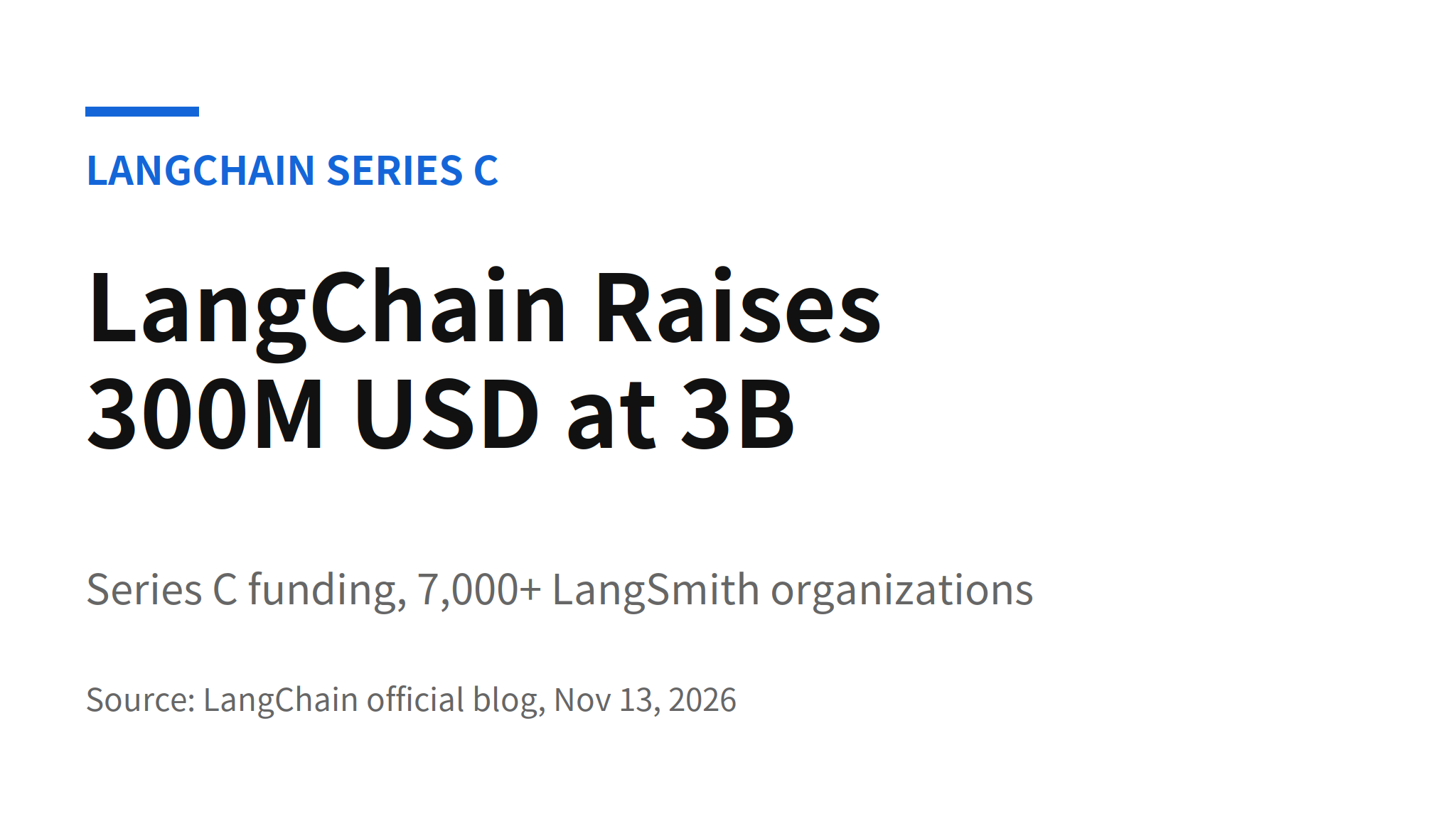
LangChain closed a $300 million Series C on November 13, 2026, at a valuation of $3 billion. The round was led by existing investor CapitalG, with GIC and DFJ Growth joining as new investors and IVP and Sapphire Ventures participating significantly, according to the company. Total funding now stands at $460 million, and the new capital goes to expanding LangSmith, the company's commercial platform for running and improving agents in production.
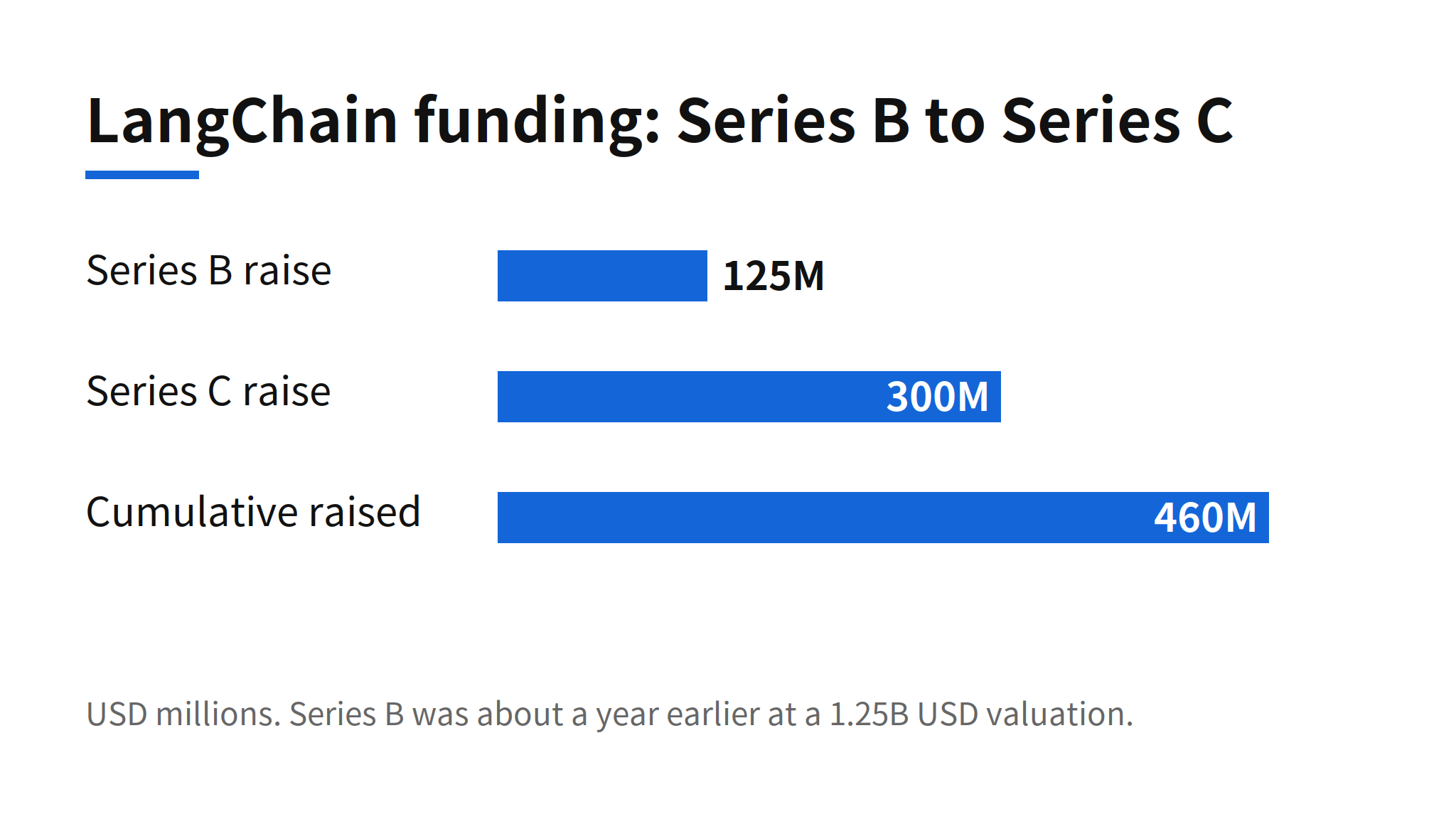
The valuation jump is the headline number. LangChain's previous round, a Series B of $125 million about a year earlier, valued the company at $1.25 billion. The Series C price is 2.4 times that figure, for a company whose flagship open source framework is free and whose revenue product is an operations platform layered on top of it.
The round, and how it compares with the Series B
The investor mix tells a consistent story. CapitalG leading a second consecutive large round signals conviction from inside the syndicate rather than a new bidder setting the price. GIC and DFJ Growth are growth stage investors, the kind that typically enter when a company is expected to scale revenue rather than prove a product. IVP and Sapphire Ventures, both already on the cap table, participated significantly rather than taking the dilution, which is the usual pattern when existing holders want to defend their share of a company they believe is still underpriced.
Set against the Series B, the step up is steep but structured. The raise itself grew from $125 million to $300 million, and the valuation from $1.25 billion to $3 billion, in roughly a year. What changed in that year, by the company's account, is LangSmith adoption: the platform is now used by more than 7,000 organizations, a figure LangChain published alongside the raise.
What the money funds: LangSmith as an operations platform
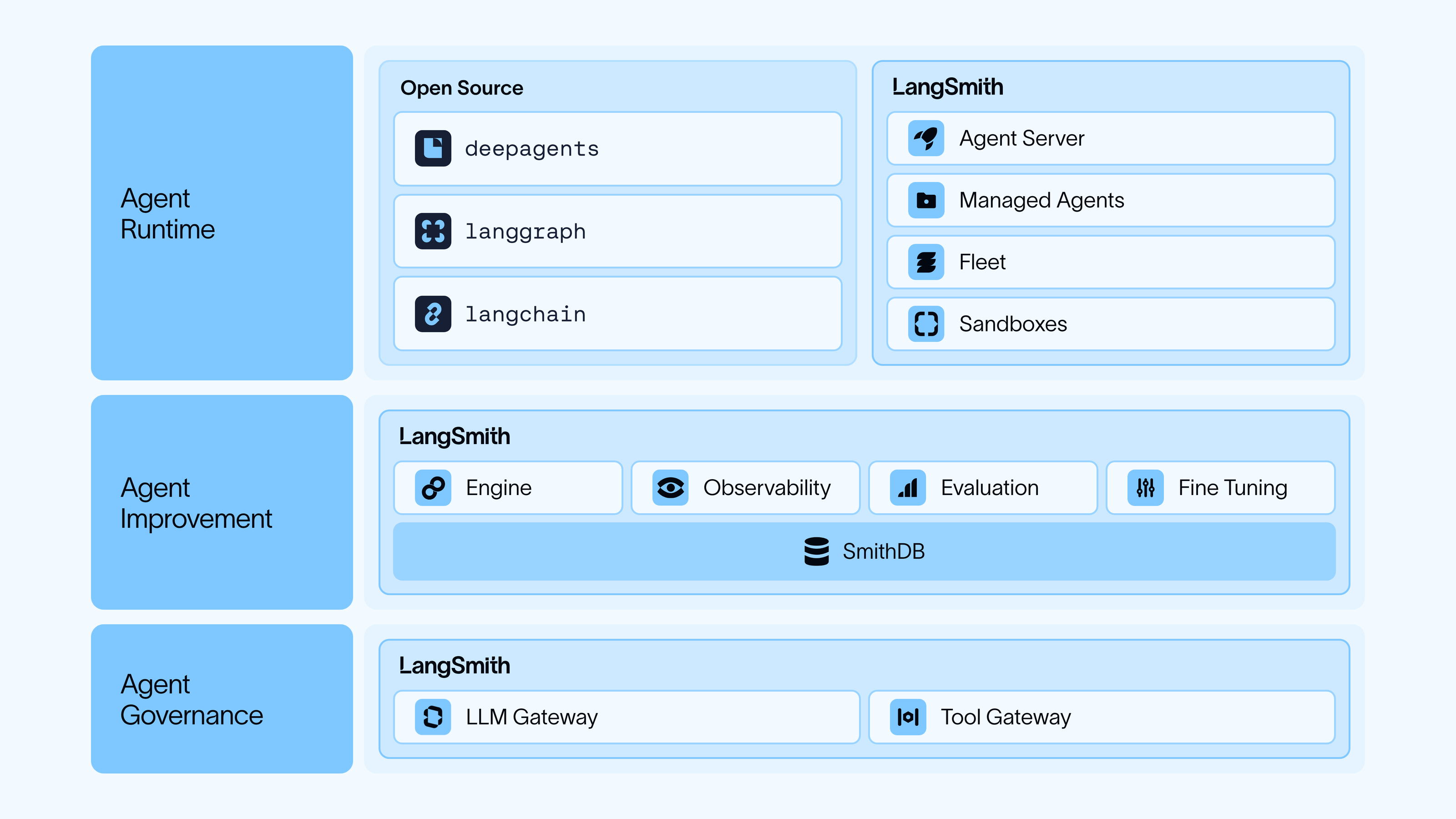
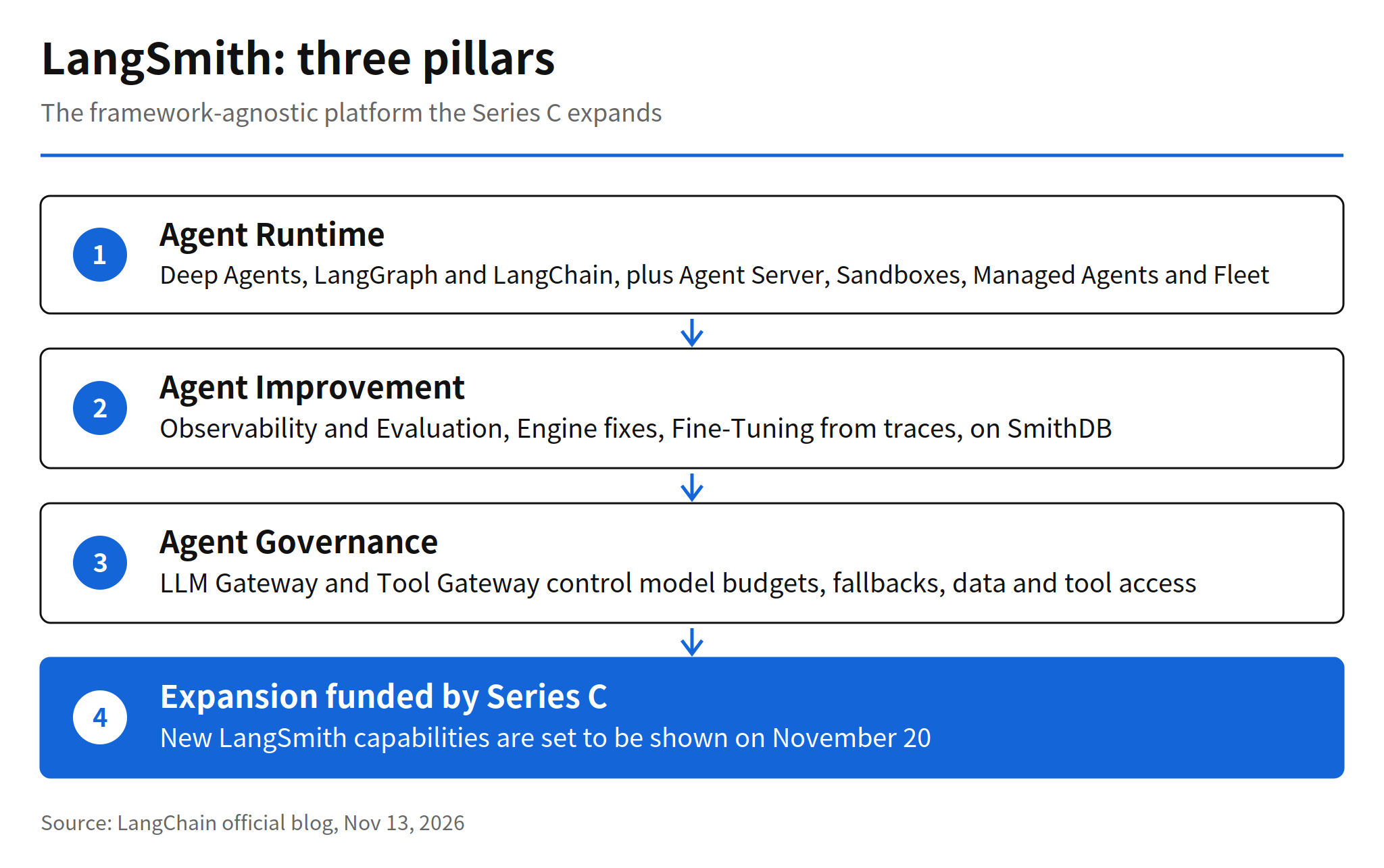
LangSmith is positioned as a platform that does not depend on which framework built the agent. LangChain describes it in three parts. Agent Runtime is the execution layer that runs agents in production. Agent Improvement covers evaluation and observability, the traces and scores used to find out why an agent behaved the way it did. Agent Governance is central control over which models and tools agents are allowed to use. The Series C announcement says the new funding goes into expanding this platform.
The framework agnostic pitch is the strategic core. Agent building tools now ship from every frontier lab and cloud provider, and an enterprise that runs agents from several of them still needs one place where execution records, evaluations and usage controls live. LangChain is betting that the operations layer is where the durable value sits, even as the frameworks underneath it commoditize.
The customer numbers, as the company reports them
LangChain named customers on both ends of the market. Startups using LangSmith include Harvey, Rippling and Listen Labs; large enterprises include NVIDIA, Toyota and Salesforce. Two usage figures stand out. Clay, the company says, monitors hundreds of millions of agent runs a month through LangSmith. Workday reportedly cut new agent deployment time from five months to under a day.
Every one of those numbers is a company claim published in a funding announcement, and none of them has independent verification attached. That does not make them useless. It means they should be read as the metrics LangChain chose to be judged by: organization count, run volume at a single large customer, and deployment time at an enterprise. If LangSmith is re-measured in a year, those are the baselines the company itself set.
From open source framework to operations platform
LangChain started in 2022 as an open source project that handled the parts early LLMs were bad at: web search, API calls and database access on the model's behalf. As frontier labs built those harnesses into their own stacks, the project's center of gravity moved toward managing agents rather than wiring them up, as TechCrunch summarized in its coverage of the raise. The Series C is the financial form of that pivot. Investors are not paying $3 billion for a framework. They are paying for the platform that observes, evaluates and governs agents after they are built, whoever built them.
What to watch: the November 20 LangSmith event
LangChain has scheduled a separate event for November 20, 2026, where it says several new LangSmith features will be unveiled. The announcement does not say which ones. For teams already running agents, the practical question is whether the new features change how traces are collected, how evaluations are scored, or how model and tool permissions are enforced, because those are the three surfaces where switching an operations platform is expensive. The funding buys LangChain the time to compete for that layer; the November 20 feature set is the first concrete evidence of what it intends to ship with it.
Limits and unverified points
Four gaps should stay attached to this story. First, the adoption and customer figures above are company reported, with no independent verification published. Second, the features coming on November 20 are undisclosed, so any claim about what LangSmith will do next is speculation until then. Third, the announcement gives no breakdown of how the $300 million will be allocated across product, infrastructure and go to market. Fourth, a $3 billion private round valuation says nothing by itself about revenue multiples, because LangChain does not publish revenue; the multiple cannot be computed from public information.
The narrower, verifiable reading is still substantial. A framework independent agent operations platform just raised $300 million at 2.4 times its previous valuation, with growth investors joining and existing investors defending their positions. Enterprises are paying to keep execution records, evaluations and governance in one place while models and frameworks rotate underneath. That demand is what the round actually confirms.
Related articles
FAQ
How much did LangChain raise in its Series C?
LangChain raised $300 million in a Series C round announced on November 13, 2026, at a $3 billion valuation. The round brings total funding to $460 million.
Who led the LangChain Series C round?
CapitalG, an existing investor, led the round. GIC and DFJ Growth joined as new investors, and existing investors IVP and Sapphire Ventures participated significantly.
How many organizations use LangSmith?
LangChain says more than 7,000 organizations use LangSmith, including startups such as Harvey, Rippling and Listen Labs and large companies such as NVIDIA, Toyota and Salesforce. The figure is company reported and has not been independently verified.
What is LangChain announcing on November 20?
LangChain has said it will unveil several new LangSmith features at a separate event on November 20, 2026. Which features will ship has not been disclosed yet.