Verlintas NOIR: Android Privacy Audit via adb, 1,187 Stars
NOIR, a desktop Android privacy audit tool published by Verlintas, reached 1,187 stars and 86 forks within about two days of its repository being created on October 31, 2026. It connects to a device over adb, reads the installed apps and their permissions, extracts network endpoints from inside the APKs, and turns the combination into a single report.
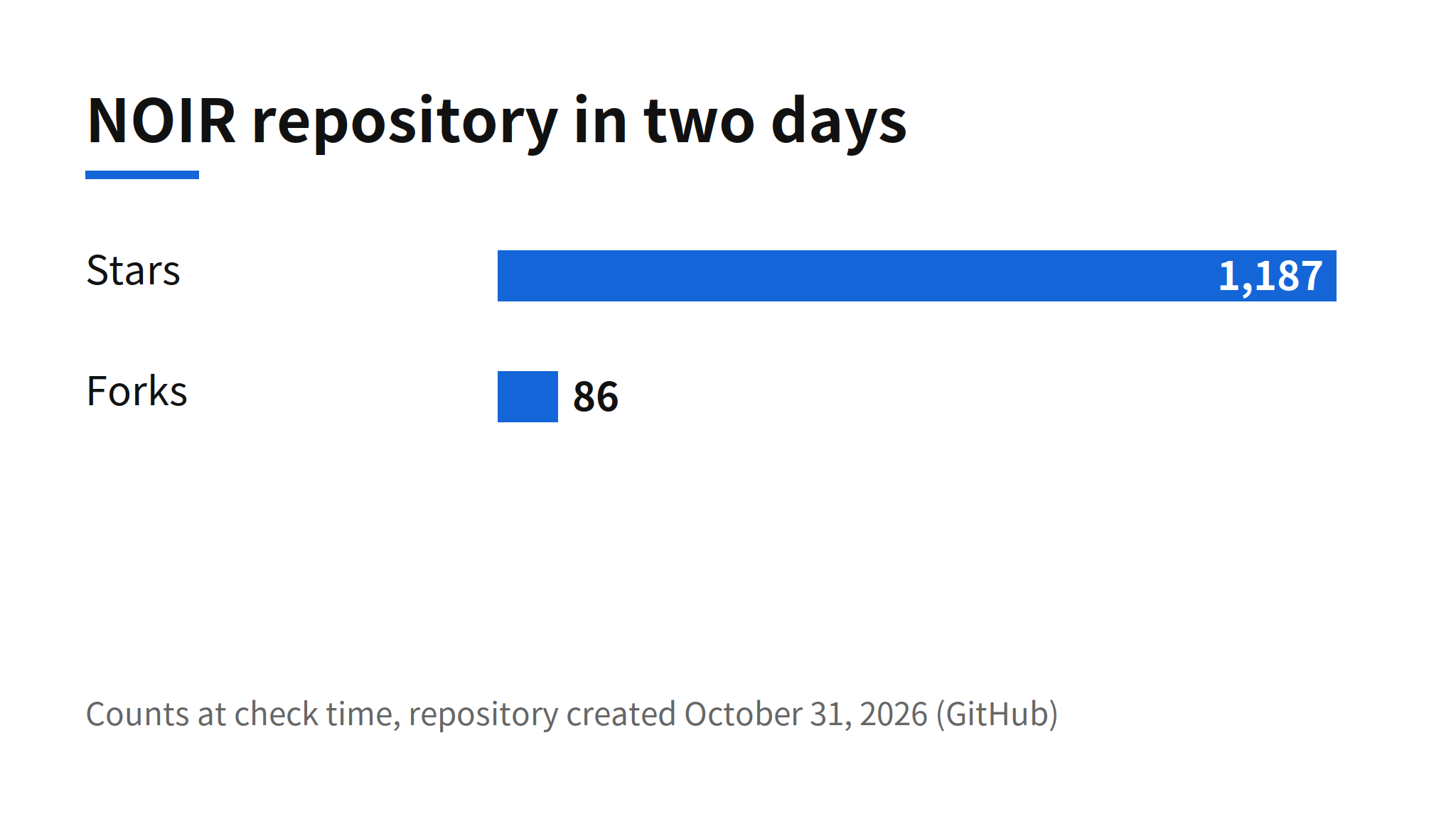
The gap the tool targets is easy to state and hard to close by hand. A permission list alone does not show where data goes, and a network capture alone does not reliably show which app sent it. NOIR joins permissions, endpoints and package identity in one place, then translates permissions into what an app can actually take: location, contacts, SMS, call logs, microphone and camera are the categories it maps.
The design choice that makes the tool practical is restraint. It is positioned for auditing your own device and your own apps, not for watching someone else's phone. No root is required, and nothing is uploaded to an external server, which matters for a tool whose whole job is inspecting private data.
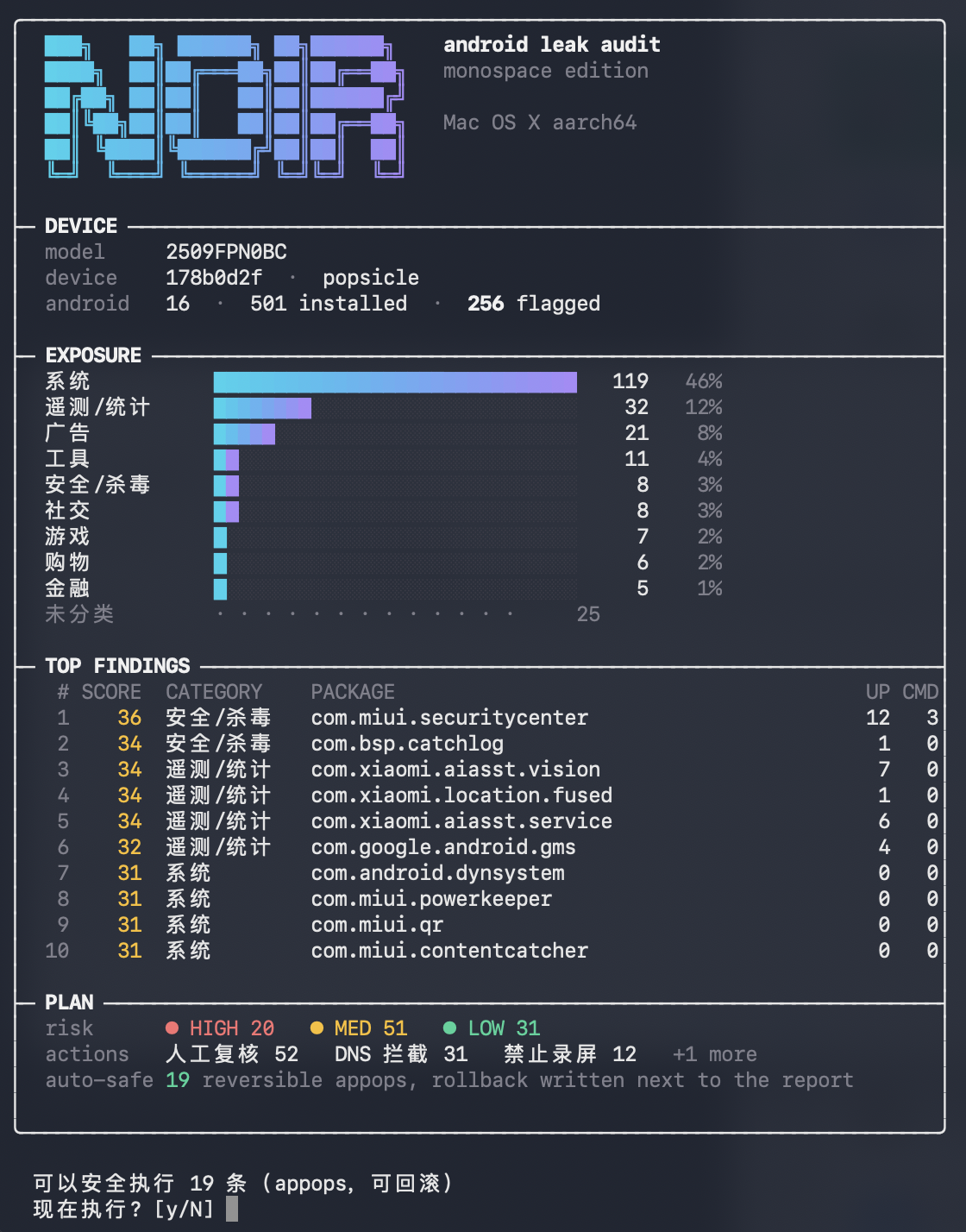
Repository Standing in Numbers
The repository is written in Kotlin and released under an MIT license. Supported systems are macOS, Windows 10/11 and Debian/Ubuntu. The speed of the star growth is the attention signal here: a privacy utility with no hosted service reached four figures in two days, which suggests the underlying frustration, not knowing what installed apps actually do, is widely shared. Stars still measure attention rather than audit quality, and the limits section below keeps that distinction in place.
How the Audit Works
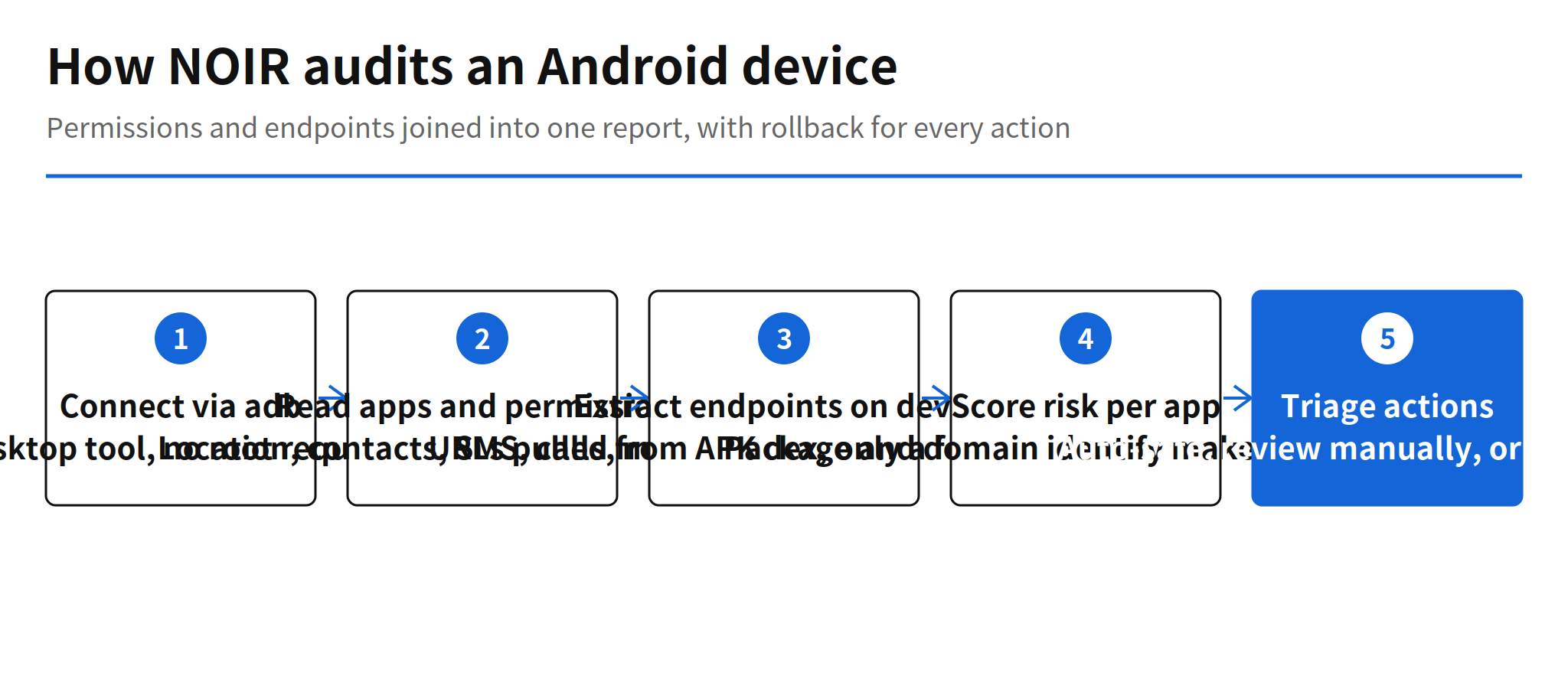
Endpoint extraction happens on the device side. NOIR pulls URLs out of the APK dex on the device, so the data that returns to the PC is only a few KB. That is more than an efficiency detail. Pulling full APKs to the desktop for every installed app would be slow and would move the very data the audit is meant to protect. Extracting in place keeps the transfer small and the inspection local.
Identification and scoring sit on top of that raw material. Package names and domains identify the maker and the service behind an app, and permissions plus endpoints are combined into a per app risk score. Apps that share a UID, and therefore merge their permissions, are flagged separately, because a merged permission set can make a harmless looking app part of a much more capable group. For deeper inspection, NOIR decompiles the APK with jadx and looks for high risk calls such as Runtime.exec and DexClassLoader, the patterns that let an app run code it did not ship in plain sight.
Triage With Rollback Commands
Findings end in one of three tiers: actions safe to run automatically, items a person should review, and items not to touch. Every action comes with a rollback command. That last detail decides whether an audit tool gets used or merely admired. Automated cleanup on a phone can break apps a person depends on, and a tool that changes settings without a way back asks for trust it has not earned. Pairing each change with its reversal keeps the human in control of the risky end of the report, while the safe tier still saves the manual work.
Value for Android Developers
The clearest audience is developers who ship Android apps. Running NOIR against your own test device before release shows the permission set and endpoint list your app presents to the outside world, in the same form a reviewer or a security checker would reconstruct it. Catching an overbroad permission or an unexpected endpoint at that stage is cheaper than explaining it during store review or after a user reports it. The tool also gives a concrete baseline for comparing builds: if a new SDK quietly adds an endpoint or a permission, a repeat audit makes the change visible instead of anecdotal.
Limits and Unconfirmed Details
- Risk score weighting: the README does not publish the detailed weighting behind the risk score, so the accuracy of the score is unconfirmed.
- Static extraction limits: endpoint extraction is static analysis. Addresses that are obfuscated or assembled at runtime may not be caught.
- Device variance: the safe range of automated actions can vary with device and maker settings. Rollback commands are provided, but verified cases on real devices have not yet been published.
Those gaps do not weaken the confirmed core, which is the audit design itself and the response it drew. They do set the standard for judging later versions: published scoring criteria and real device verification cases would turn a popular tool into a trustworthy one.
Related Reading
Continuous security checking for code is the subject of an earlier post in this series: Claude Security: Continuous Monitoring Rescans Every Commit. NOIR applies the same audit instinct to installed Android apps rather than commits, and the two tools sit at opposite ends of the release pipeline.
FAQ
What is NOIR by Verlintas?
NOIR is a desktop Android privacy audit tool. It reads the app list and permissions of a connected device and the network endpoints inside APKs, then builds a report. It is written in Kotlin, uses an MIT license, and runs on macOS, Windows 10/11 and Debian/Ubuntu.
Does NOIR need root or send data to a server?
No root is required, and data is not uploaded externally. URLs are extracted from the APK dex on the device side, so only a few KB of data come back to the PC.
How does NOIR score risk?
It identifies makers and services from package names and domains, then combines permissions and endpoints into a per app risk score. Apps whose permissions merge through a shared UID are flagged separately. The detailed weighting of the score is not published in the README, so its accuracy is unconfirmed.
What happens after the audit?
Findings are split into three tiers: actions safe to run automatically, items a person should review, and items not to touch. Every action ships with a rollback command. A deeper pass decompiles the APK with jadx to look for high risk calls such as Runtime.exec and DexClassLoader.