Meta Muse Wonder Specialized Models: Memory and Focus Gains
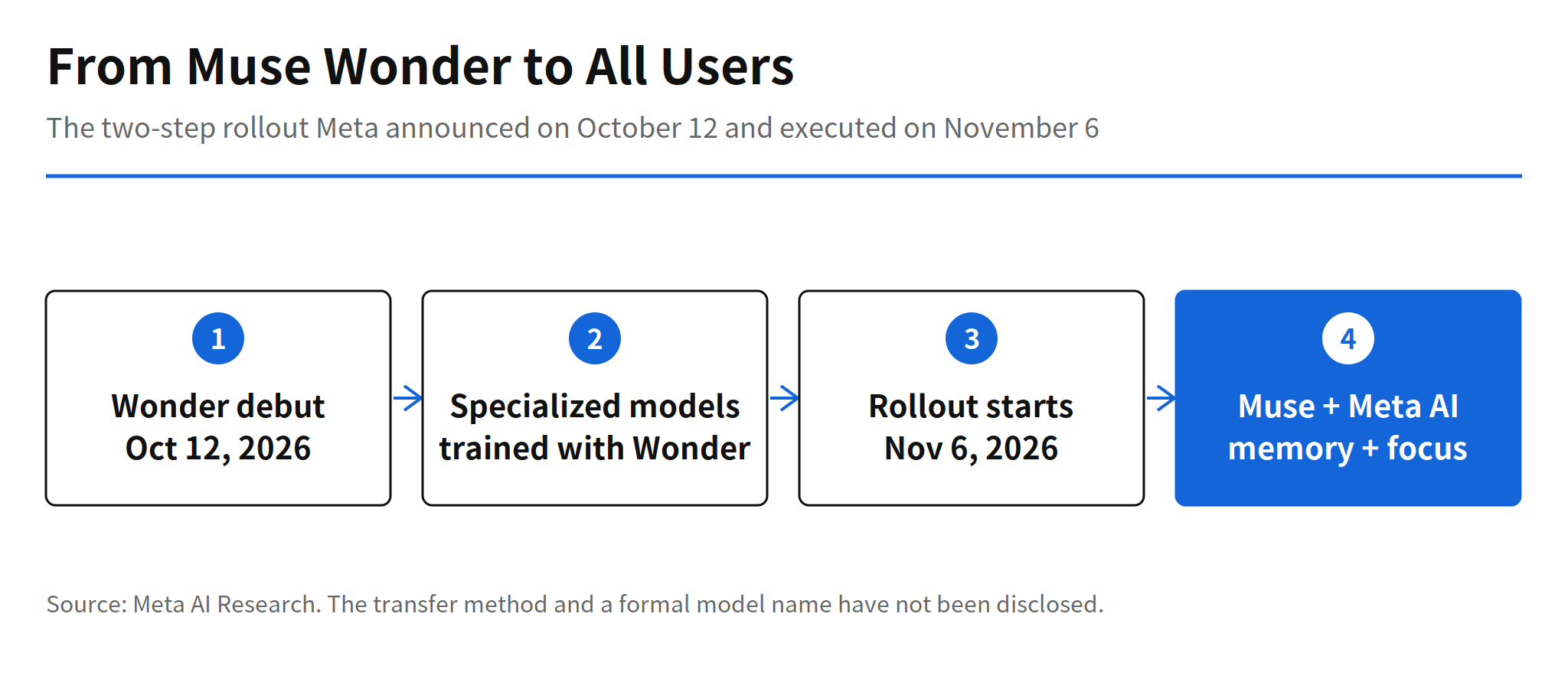
Meta announced on November 6, 2026 that specialized versions of its existing models, trained with Muse Wonder, have started rolling out to users of Muse and Meta AI. This is not Wonder itself reaching every user. Meta trained the existing models on Wonder behavior, so the gains arrive inside the products people already use. The two capabilities carried over are Active Memory and Active Focus, both first introduced with the Muse Wonder debut on October 12.
The headline claims are specific. Meta reports that Muse now forgets information critical to reaching a goal 2.4 times less often, and that the share of everyday tasks completed despite unexpected problems rose by 67 percent. Those are the two failure modes that dominate long agent sessions in practice: losing the thread of what matters, and giving up at the first obstacle. A release that targets exactly those two modes, rather than another general benchmark gain, is worth reading closely, with the caveat that every figure in this post comes from Meta internal evaluation.
Active Memory and the 2.4x Forgetting Claim
Active Memory is about selective retention. Meta says the models were trained to separate temporary information from information worth keeping, to judge which stored details stay valid over time and which have gone stale, and to notice the moment when older information becomes relevant again. That last part is the hard one. Plenty of systems can store a fact. Fewer can resurface it at the right point in a task without being asked.
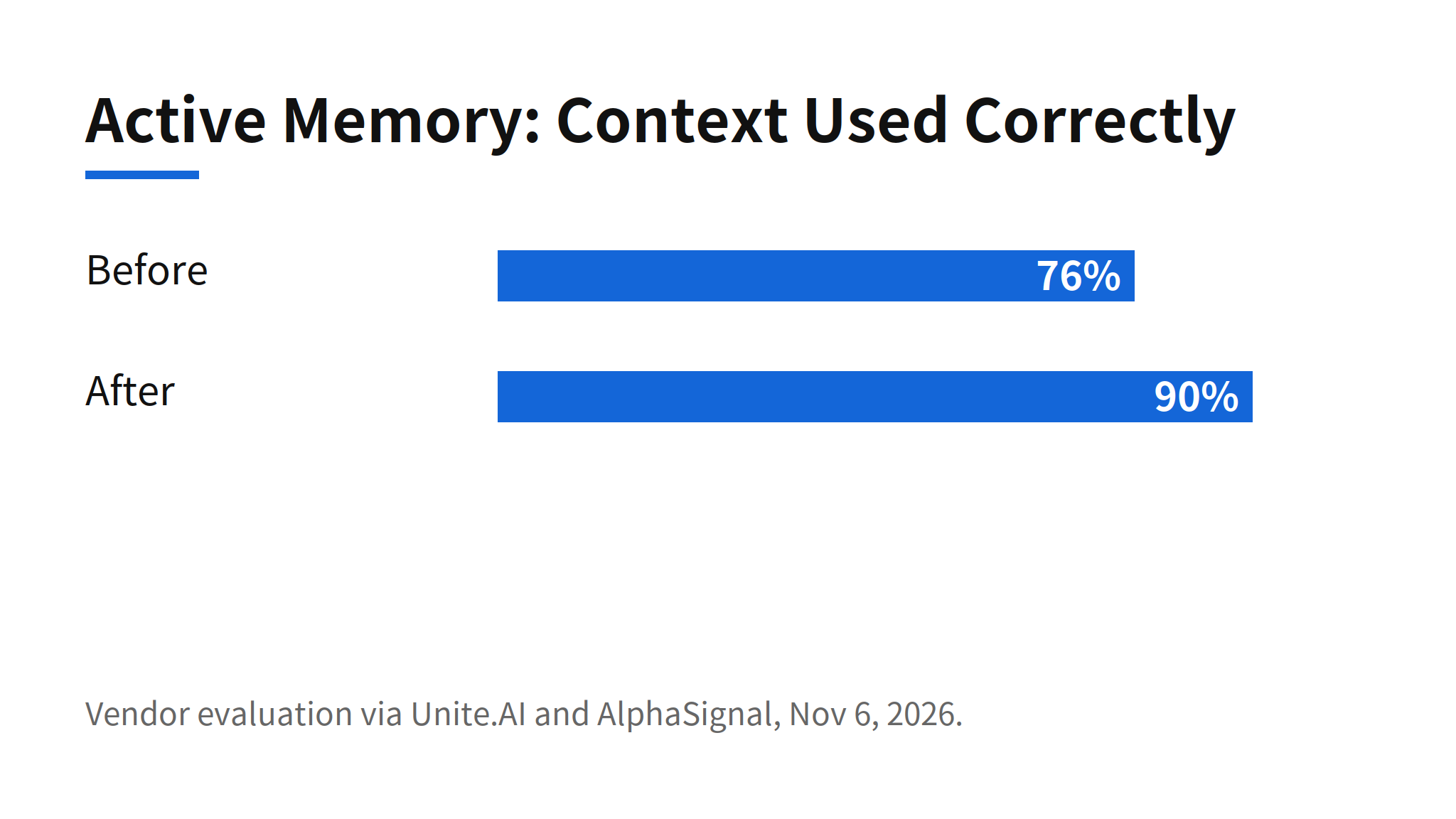
The 2.4x figure is framed as a reduction in how often Muse loses goal critical information. Secondary coverage of the same release adds a second memory number: the rate at which key context was used correctly rose from 76 percent to 90 percent. Read together, the two numbers describe the same design goal from both ends, dropping less and applying more of what is kept. For teams building their own agent evaluations, that split is the useful takeaway. Retention and correct application are different measurements, and a memory feature can improve one while leaving the other flat.
Active Focus and Recovery From Unexpected Problems
Active Focus covers what happens after something goes wrong. Meta says the models were trained on varied bottlenecks modeled on real situations, so that when an unexpected problem appears the model keeps working toward the goal: trying again, recovering, or finding a different route. The reported result is the 67 percent improvement in completing everyday Muse tasks that hit an unexpected problem.
The specialized models also address multitasking. Meta describes a distinction between pushing a goal forward alone and collaborating with a user in real time. The models were trained to keep the thread of a task when a user changes direction or adds clarification mid work. Anyone who has watched an agent restart from scratch after a small correction will recognize why that matters. In Meta AI, the same training is presented differently: better decomposition of complex problems into steps, sharper follow up questions, and the ability to follow a user who changes direction during the conversation.
Scores, Rollout Scope and Unverified Claims
Secondary coverage puts the current Muse score on Meta's own Personal Superintelligence Index at 47 percent, up from 38 percent for the previous model. The index is a Meta metric, so the comparison shows internal progress rather than standing against competitors. The same caution applies to the whole release. The 2.4x, 67 percent, 47 percent and 90 percent figures are all vendor numbers, and no third party verification exists yet.
Several basic facts remain undisclosed. Meta has not published a technical document explaining how Wonder behavior was transferred into the existing models, and calling the method distillation would go beyond what the source states. The specialized versions carry no formal model name, and Meta has not detailed which existing models changed or by how much. The rollout is described only as having started, with no regional schedule. The release also landed alongside Spaces, a feature for building custom spaces in Muse, on the same day.
The pattern to watch is a frontier model's behavior being packaged into lighter models for the full user base. This release is a confirmed production case of that pattern, not a research preview.
Related Reading
The memory question runs through recent agent releases. See the coverage of Anthropic agent memory and dreaming, where the design problem is also what an agent should keep and revisit, and of Meta Muse Voice, the previous step in the Muse product line before this model rollout.
FAQ
What did Meta release on November 6, 2026?
Meta began rolling out specialized versions of its existing models, trained with Muse Wonder, to users of Muse and Meta AI. The release transfers Wonder behavior into the existing models rather than shipping Wonder itself to everyone.
What are Active Memory and Active Focus?
Active Memory covers remembering important information and noticing when older information becomes relevant again, including separating temporary details from durable ones. Active Focus covers continuing toward a goal when an unexpected problem appears, by trying again, recovering or finding another path.
What gains does Meta claim for the specialized models?
Meta reports that Muse forgets information critical to a goal 2.4 times less often, and that completion of everyday tasks hit by unexpected problems improved by 67 percent. Secondary coverage puts correct use of key context at 90 percent, up from 76 percent, and the current Muse score on the Personal Superintelligence Index at 47 percent, up from 38 percent.
What has Meta not disclosed about the specialized models?
Meta has not published a technical document explaining how Wonder behavior was transferred, has not given the specialized versions a formal model name, and has not detailed which existing models changed or by how much. All reported figures come from Meta internal evaluation, with no third party verification yet, and regional rollout timing is undisclosed.