Hermes Agent v0.23.0: One Gateway, Browser Workspace
NousResearch released Hermes Agent v0.23.0, named The Hearth Release, on November 5, 2026. The release rebuilds the runtime around a single gateway. One gateway per computer now owns every session, and the CLI, TUI, Desktop app, editor integrations, messaging bots and cron jobs attach to it as clients instead of each running an agent of their own.
The second headline is a new Webapp served by that gateway, which puts the full desktop workspace into a browser tab. Around those two changes sit a cost control feature for paid MCP tools, a plugin catalog that grew past 1,050 entries, and a built-in skill set that shrank from 58 to 44. The repository stands at 261,202 GitHub stars as observed on November 7, under the MIT license, with Python as its main language.
One Gateway Owns Every Session
Hermes Agent started as a CLI tool and grew surfaces: a desktop app, the web, messaging bots. Each surface ran its own agent, and the release notes name the failure mode directly. Messages were written twice, or disappeared between surfaces, because no single process owned the conversation. Version 0.23.0 treats that as an architecture problem rather than a sync bug. The gateway becomes the only owner of sessions, and every surface becomes a client of it.
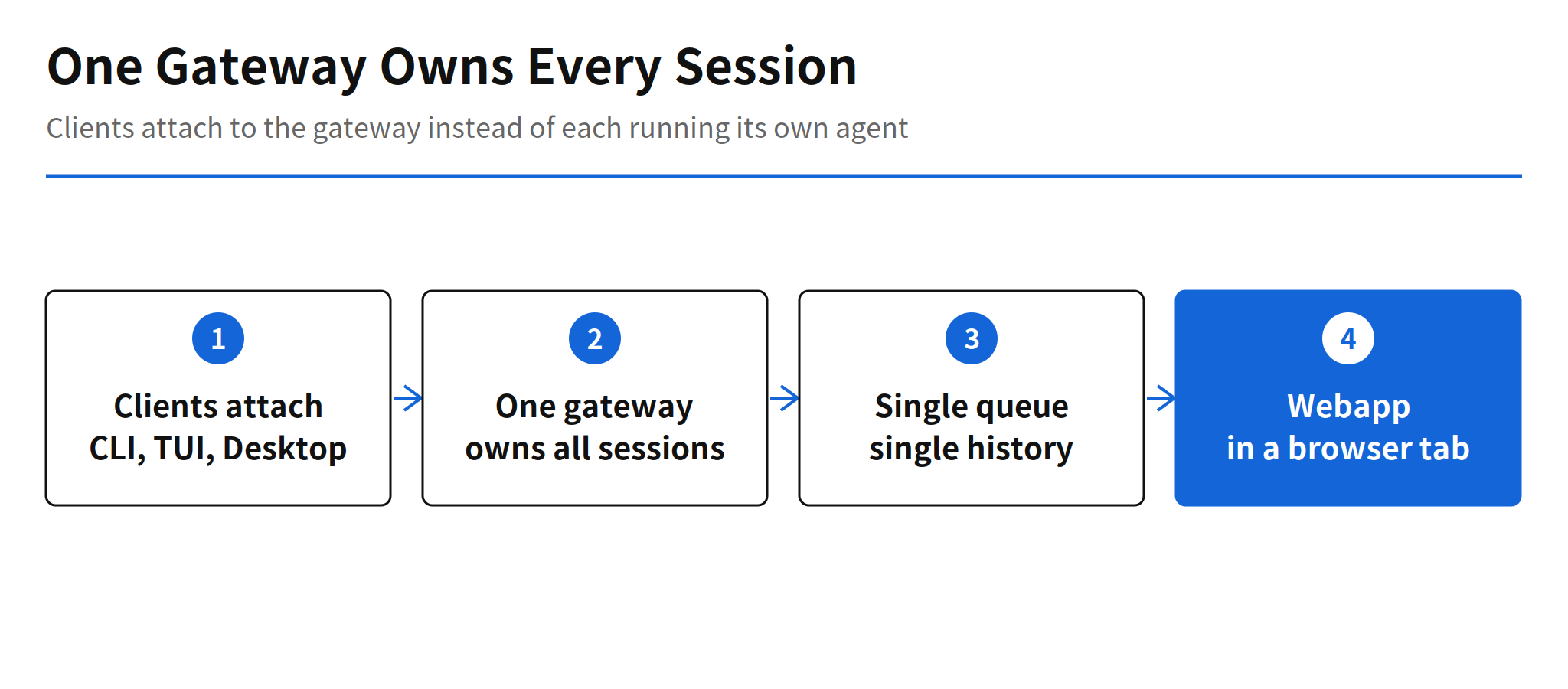
The practical effect is that the queue and the history are singular. A conversation started in a terminal and continued from a messaging bot reads from the same record, because both clients talk to the same owner. For a personal agent that stays on for long stretches, session ownership is a reliability question before it is a convenience question. Duplicated execution and split history are the failures that erode trust in an always-on agent, and this release removes the structural cause instead of patching individual surfaces.
The trade-off is equally structural. A single gateway is also a single point of failure, and the release notes do not describe a recovery procedure for that case. Anyone running Hermes as long-lived infrastructure should treat gateway backup and restart behavior as their own homework until NousResearch documents it.
The Webapp in a Browser Tab
The new Webapp is served by the gateway itself and opens the desktop workspace in a browser tab. Chat, Group Chats, plugins and settings all carry over, so the browser surface is the full workspace rather than a reduced companion view. It ships inside the Docker image and the Nix package, and it is off by default.
That default matters. A workspace that can be opened from any browser is convenient exactly in proportion to how dangerous an exposed agent endpoint is, and the project chose opt-in. The open question is authentication. The notes describe access control only in terms of a login flow, and the detailed security model for putting the Webapp behind a public URL is unconfirmed. Until that model is documented, the sensible deployment is a private network or a tunnel, with the public URL treated as an experiment rather than a setup.
Paid MCP Tools Declare Their Price
Paid MCP tools can now declare a price per call. When such a tool is about to run, the approval prompt shows the per-call price and the running total spent in that chat. If a call would pass the spending limit, the agent asks first, and that check applies even in YOLO mode, where approvals are otherwise skipped.
This is agent cost control moving from dashboards into the execution path. A running total inside the approval prompt changes the decision from a monthly surprise into a per-call judgment, and exempting the limit check from YOLO mode shows the limit is treated as a hard boundary rather than a preference. The limit design appears to be per chat. Whether user-level or organization-level spending policies exist is unconfirmed, which is the gap a team deployment would hit first.
Plugin Catalog Growth and the Verified Tier
The plugin catalog grew from roughly 600 entries to more than 1,050. A new Verified tier marks plugins built by the vendor itself, which gives users a trust signal inside a catalog that is now too large to evaluate entry by entry. The release also adds hermes plugins update and an automatic update switch, so keeping plugins current becomes a setting instead of a chore.
Catalog growth of this size cuts both ways. More entries mean the extension surface is working, and they also mean discovery and trust become the bottleneck. The Verified tier is a partial answer: it identifies provenance, while leaving quality judgment for unverified plugins with the user.
A Smaller Built-in Skill Set
While the plugin catalog grew, the built-in skills went the other direction, from 58 down to 44. Word, PowerPoint and Excel support merged into a single microsoft-office skill. Consolidation of that kind reduces overlap between skills that an agent has to choose among, and a shorter list makes selection errors less likely.
The companion feature is hermes curator lock, which locks a hand-tuned skill so the agent cannot rewrite it. Anyone who has watched an agent quietly edit the instructions it runs on will recognize the problem. The lock turns curated skills into read-only assets, and it pairs naturally with the consolidation: fewer built-in skills, and the ones a user refined by hand stay exactly as refined.
Release Scale and Project Standing
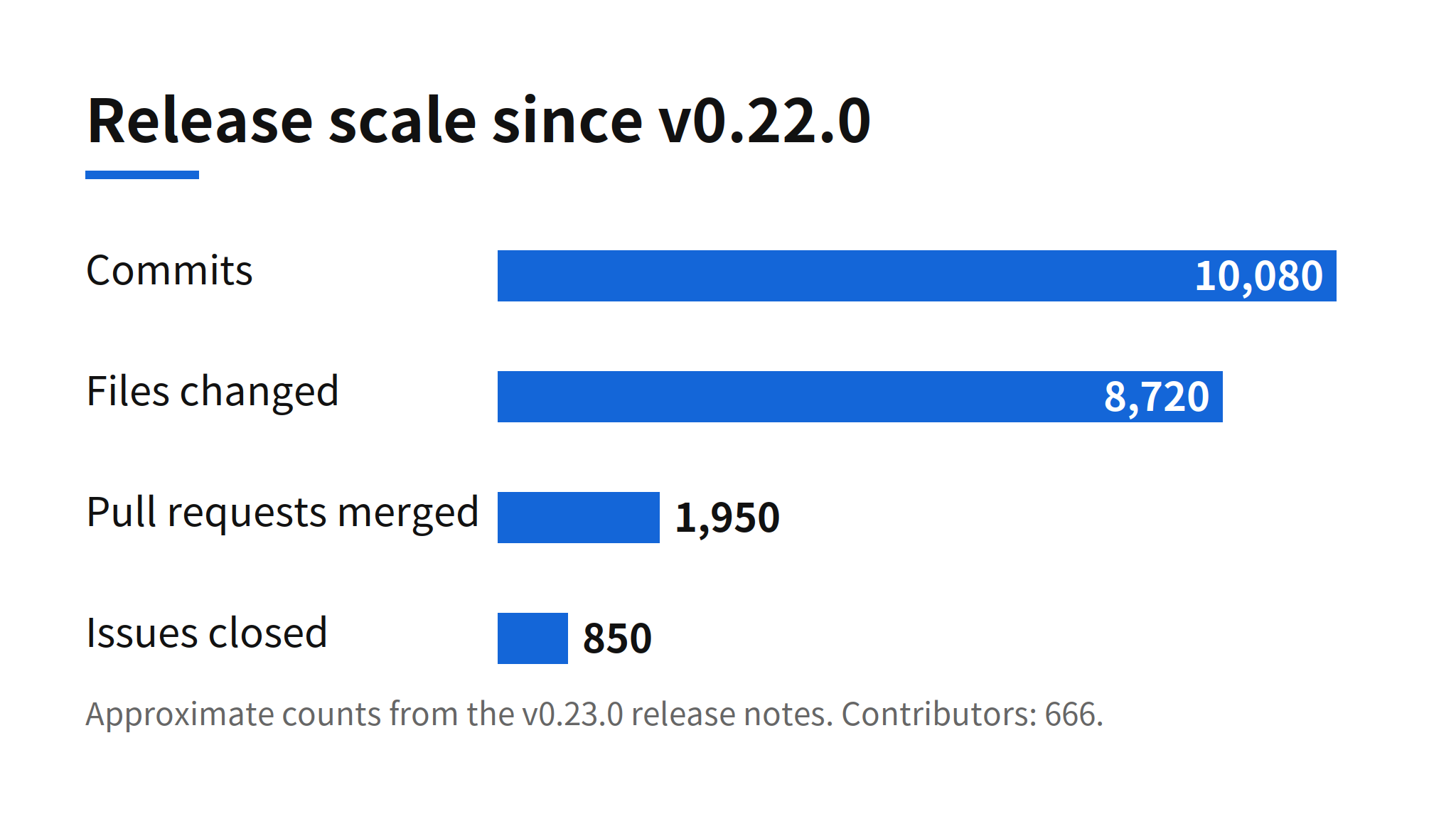
By the release notes, the cycle since v0.22.0 covers about 10,080 commits, about 1,950 merged pull requests, about 8,720 changed files and about 850 closed issues, from 666 contributors. The release also documents the patch line from v0.22.1 through v0.22.7 alongside the new version. Numbers at this scale describe a project whose bottleneck is coordination, which fits the release theme: the headline change is about consolidating ownership, in the runtime and in the skill set alike.
Limits and Unconfirmed Details
Three points stay open. The Webapp security model for public exposure is described only as a login flow. Spending limits for paid tools appear to be per chat, with user or organization policies unconfirmed. And the recovery story for the gateway as a single point of failure sits outside the release notes. None of these cancel the release. They mark the boundary between what v0.23.0 ships and what an operator still has to verify before depending on it.
Related Reading
For another approach to moving agent sessions off the local machine, see the report on Antigravity Remote Agents and cloud coding sessions. For persistent agents that keep working across surfaces, see Perplexity Teammates and persistent agents.
FAQ
What is the main change in Hermes Agent v0.23.0?
One gateway per computer now owns every session. The CLI, TUI, Desktop app, editor integrations over ACP, messaging bots and cron attach as clients, and the queue and history live in one place instead of splitting across surfaces.
What does the new Webapp do?
The Webapp is served by the gateway itself and opens the full desktop workspace in a browser tab, including chat, Group Chats, plugins and settings. It is off by default and ships in the Docker image and the Nix package.
How do paid MCP tools work in this release?
A paid MCP tool can declare its per-call price. The approval prompt shows that price and the running total for the chat, and the agent asks before a call would pass the spending limit, even in YOLO mode.
What is still unconfirmed about v0.23.0?
The release notes describe authentication for a publicly exposed Webapp only as a login flow, with no detailed security model. Whether spending limits exist at user or organization level, beyond the per-chat design, is also unconfirmed.