Gemini Omni 1.2 Flash GA: 15-Second Video, $0.07 Pricing
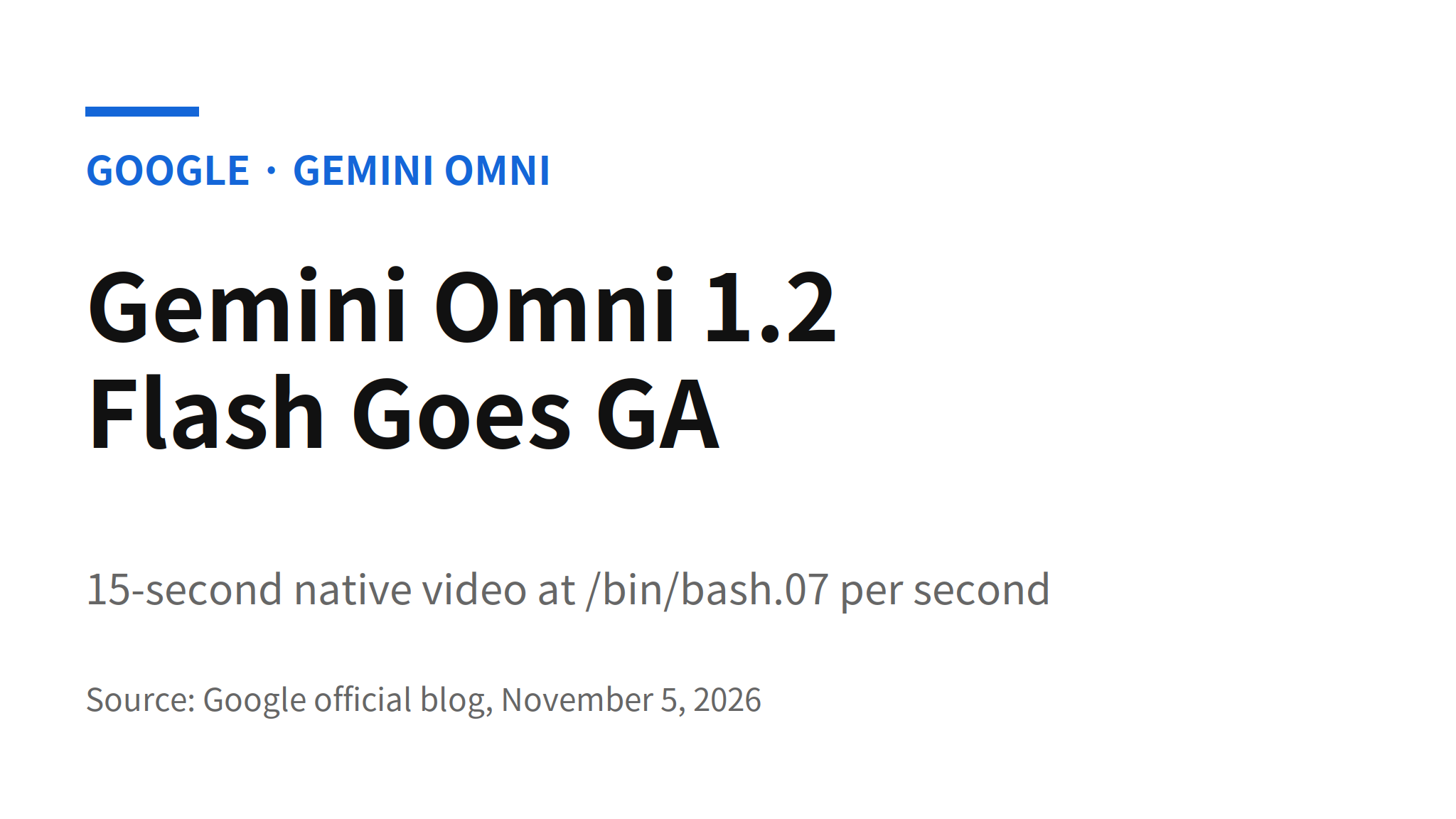
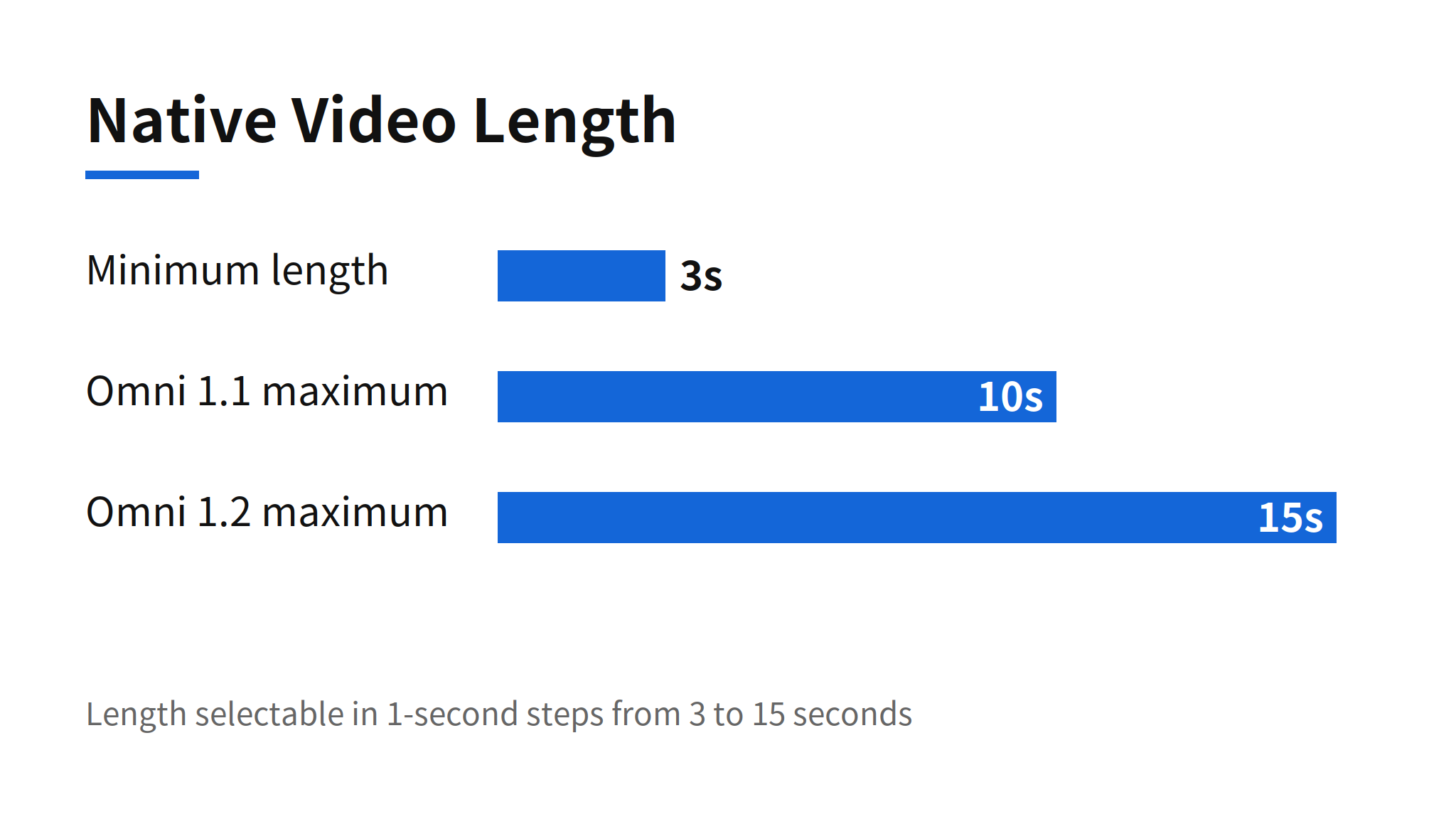
Google released Gemini Omni 1.2 Flash on November 5, 2026 and started general availability through the Gemini API and Gemini for business. Native video length rises to 15 seconds, up from the 10 second cap in Omni 1.1, and 720p pricing falls to $0.07 per second, a cut of 30% against the previous version. Length can be set in 1-second steps between 3 and 15 seconds.
This is the first time a Gemini Omni model has reached general availability. The release adds Google Cloud enterprise infrastructure and security, Provisioned Throughput, and an invisible SynthID watermark in the output. In our reading, the GA stamp matters as much as the extra five seconds: a model that teams can call through a production API, with enterprise terms attached, competes on a different axis than a demo model, even when the demo looks similar.
The direction of the release is also clear from what Google chose to improve alongside length. Earlier Omni versions forced longer scenes to be generated in pieces and stitched together, and identity drift across those pieces was the weak point. Version 1.2 answers with stronger reference following and conversational editing across the full clip, which reduces the stitching work instead of only stretching the canvas.
Length, Pricing and the Draft Workflow
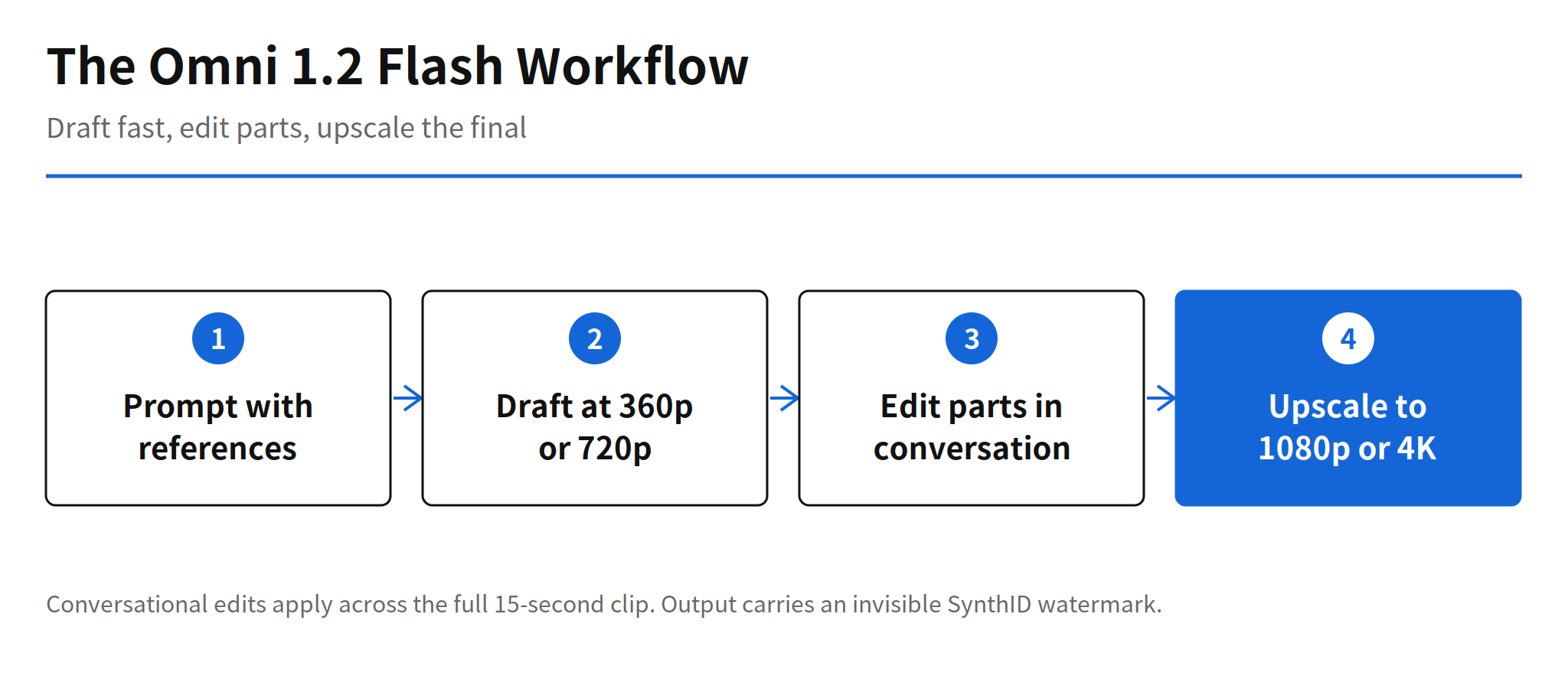
The workflow Google describes starts cheap and finishes expensive only once. A creator drafts quickly at 360p or 720p, fixes only the parts that miss with follow-up edits, and upscales the finished clip to 1080p or 4K. The full clip does not need to be regenerated for a local fix, which changes the cost shape of iteration: failed sections stop consuming a full generation each time they are corrected.
Reference Following and Conversational Editing
Reference following is the continuity mechanism. A prompt can combine a person, a product and a style image with a short motion clip of up to 3 seconds and audio cues, and Google says faces, outfits, package typography and brand colours then hold across camera angle changes. Those are exactly the elements that used to drift when a scene had to be assembled from several 10 second generations.
Conversational editing applies across the whole 15 second clip. A creator can swap a product or a background, change lighting or weather, and change the aspect ratio in sequence inside the same clip. Combined with the draft workflow, the practical effect is fewer full regenerations and fewer review rounds, which is where production time actually goes in short-form and advertising work.
Access Paths by Product
Access differs by surface. Developers use Google AI Studio and the Gemini API, and businesses use the Google Cloud console. Consumers build scenes in Flow, and Google Vids offers 15 second clips at no extra cost. In the Gemini app, the feature is rolling out in stages to Google AI Ultra subscribers, and Google Ads can also build video campaigns with it. The staged app rollout means availability will vary by account for a while, and the announcement does not give per-region or per-account opening dates.
Limits and Open Pricing Questions
Google itself names the weak areas: fast sports motion, fast script changes and complex physics are still in development, so quality in those areas cannot be confirmed from the announcement alone. Independent testing on real prompts is still the only way to judge how far the reference claims carry outside curated examples.
For production teams, the calculation that changes today is concrete. A single 15 second native generation can cover one advertising cut or one product explanation scene, at a stated per-second price that fell by 30%, through an API that now carries general availability status. Whether the continuity claims hold is a test each team has to run on its own subjects, but the unit economics of trying have clearly moved.
Related Reading
For another hosted agent and media release, see the earlier report on Kimi Hosted Agents, its pricing and skills. For a release that automates the shipping layer for AI-written code, see the original research issue on LaunchDarkly Release Autopilot.
FAQ
What is Gemini Omni 1.2 Flash?
Gemini Omni 1.2 Flash is a Google video generation model that takes text, images, audio and video together in one prompt. Google released it on November 5, 2026 and started general availability through the Gemini API and Gemini for business.
How long can a Gemini Omni 1.2 Flash video be?
Native video length is up to 15 seconds, up from the 10 second cap in Omni 1.1. Length can be set in 1-second steps between 3 and 15 seconds.
What does Gemini Omni 1.2 Flash cost?
Pricing is $0.07 per second for 720p video, which Google states is 30 percent lower than Omni 1.1. The announcement does not give 1080p or 4K upscale pricing, or how repeated edits are billed.
Where can people use Gemini Omni 1.2 Flash?
Developers use Google AI Studio and the Gemini API, and businesses use the Google Cloud console. Consumers can build scenes in Flow, make 15-second clips in Google Vids at no extra cost, and access it in the Gemini app as it rolls out to Google AI Ultra subscribers. Video campaigns in Google Ads can also use it.
Sources
- Google official blog, Gemini Omni 1.2 Flash: 15-second video and lower pricing (November 5, 2026)
- AlphaSignal, Google Pushes Gemini Omni 1.2 Flash to 15-Second Videos at 30% Lower Cost (November 5, 2026)
- Original issue: ax-trend issue #3819
- Related issue: ax-trend issue #661, Gemini Omni introduction for Google Flow