GPT-6 Pro Parallel Agents: One Request, Multiple Agents
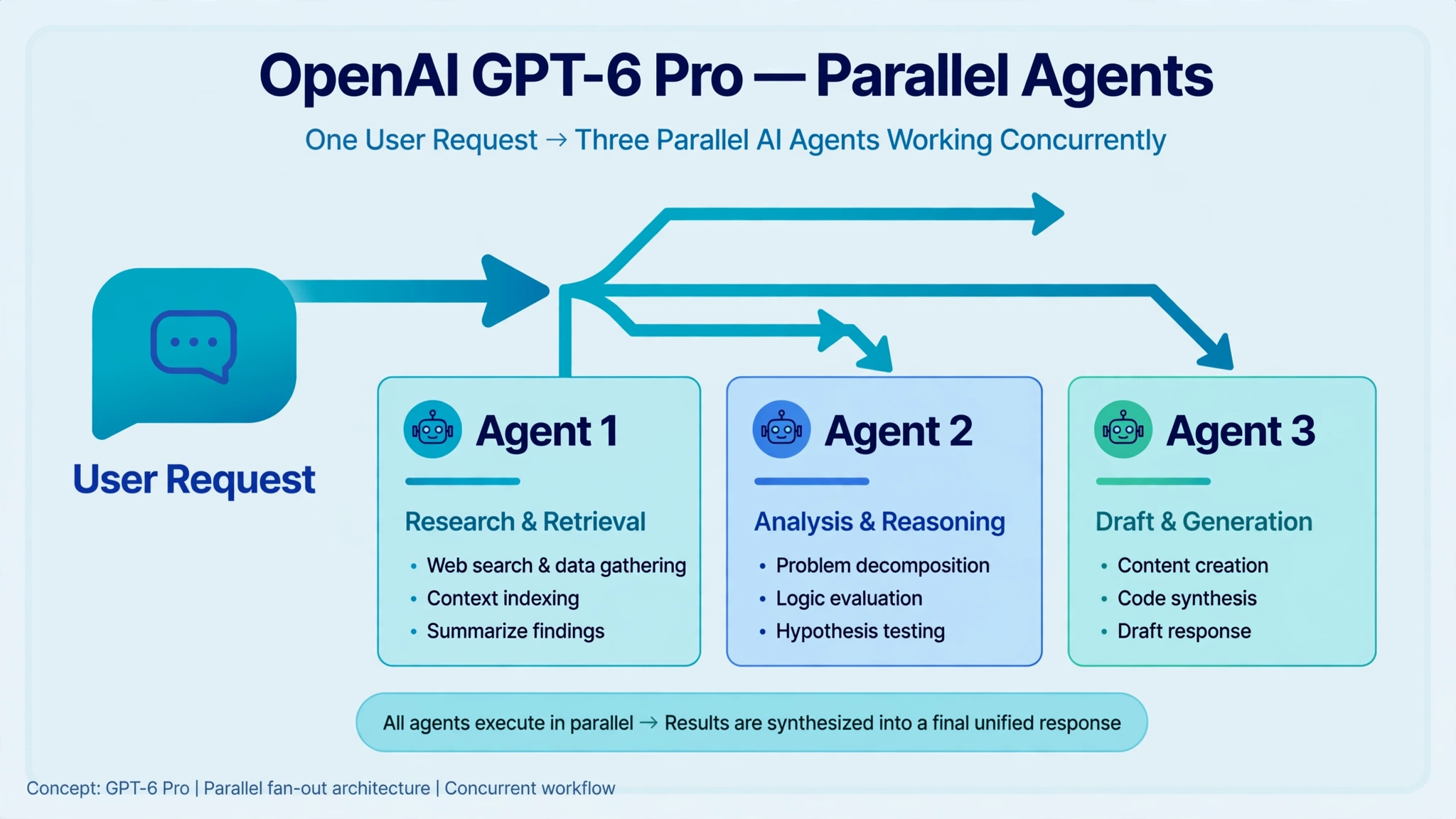
In release notes dated October 16, OpenAI introduced GPT-6 Pro Parallel Agents. Eligible ChatGPT Pro users can send one request to multiple agents at the same time, and each agent processes the request concurrently. The same release-note bundle includes ChatGPT Slides: creating and editing presentations inside a Space.
One-line summary for developers: parallel subagent orchestration itself was already documented as a beta in the Responses API for GPT-6.1 Sol and GPT-5.6. This release extends it into the ChatGPT interface. The real takeaway is less the feature than the UX reference: per-agent progress display and per-task review of finished results. That is a visibility design pattern that solves the 'silence' problem of agent work.
Parallel Agents: How the Fan-Out Works
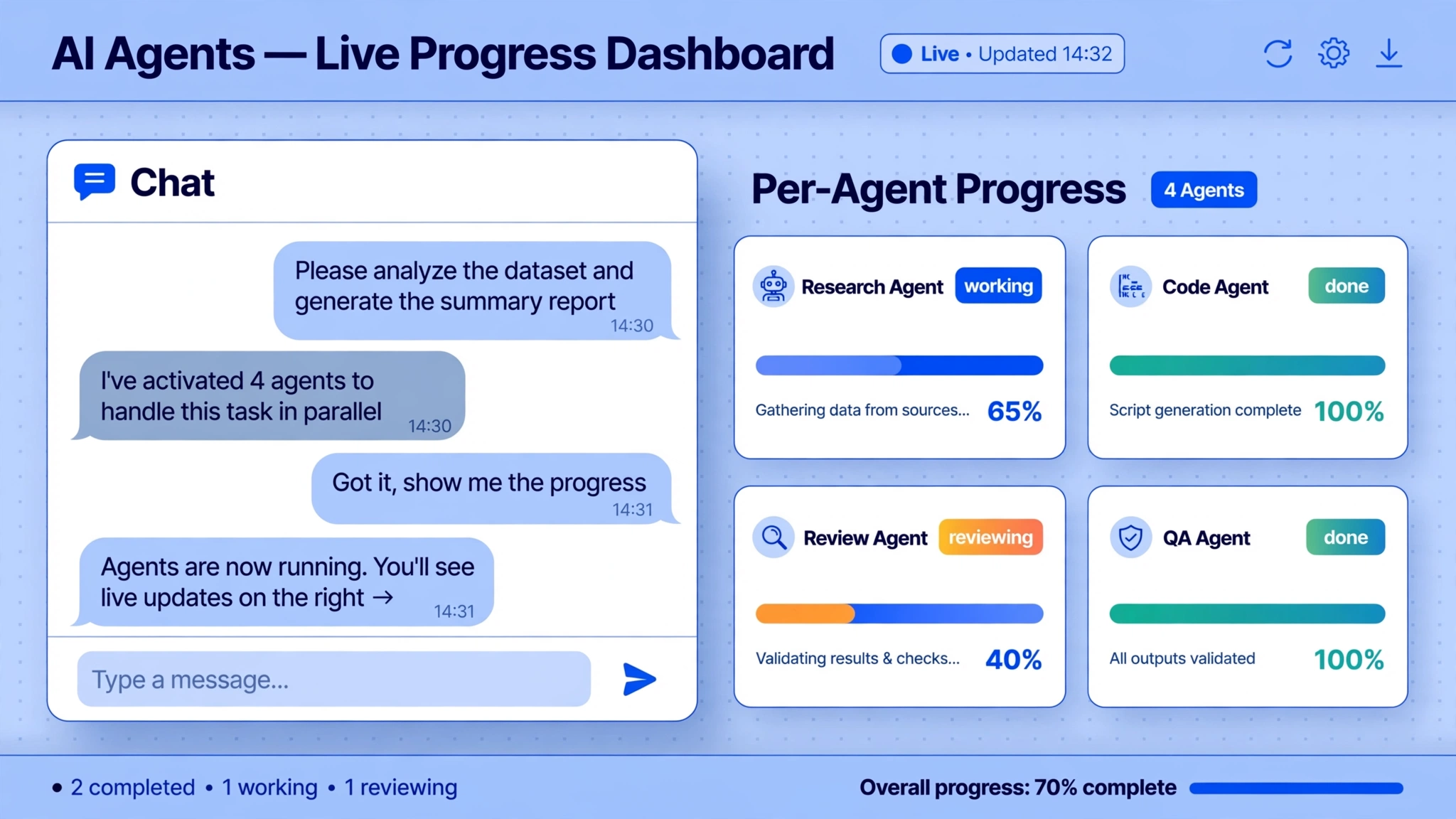
The announced behavior, in summary:
- One request sent to multiple agents simultaneously: each agent works on the request concurrently ("Each agent works on the request concurrently," EconoTimes, October 17).
- Progress display: a progress view shows the agents' activity.
- Completed results open for individual review: results can be opened and reviewed per completed task.
- Rollout audience: Pro users in the Chat tab who meet eligibility. For managed workspaces, availability depends on workspace settings and rollout eligibility, and no schedule has been published (RR Tech Pulse, October 17).
- The same bundle includes faster responses and improved plugin and tool use. Speed, though, is stated only as "faster" with no figures; it is OpenAI's claim with no independent measurement (RR Tech Pulse).
As a design pattern to borrow when putting agent features into your own app, it comes down to modeling each agent's execution state independently. It also means exposing each one's progress in parallel:
// Modeling parallel agent progress (conceptual reconstruction)
data class AgentRun(
    val id: String,
    val status: AgentStatus, // QUEUED / WORKING / REVIEW_READY / DONE / FAILED
    val progress: Float,     // 0.0 ~ 1.0
    val result: TaskResult?
)
interface ParallelAgentOrchestrator {
    fun dispatch(request: AgentRequest, fanout: Int): List<AgentRun>
    fun observe(): Flow<List<AgentRun>>  // per-agent progress stream
}
// Subscribe to observe() and render an individual progress bar on each agent card
// The user taps any card to open and review only the finished result
ChatGPT Slides: The Second Feature in the Bundle
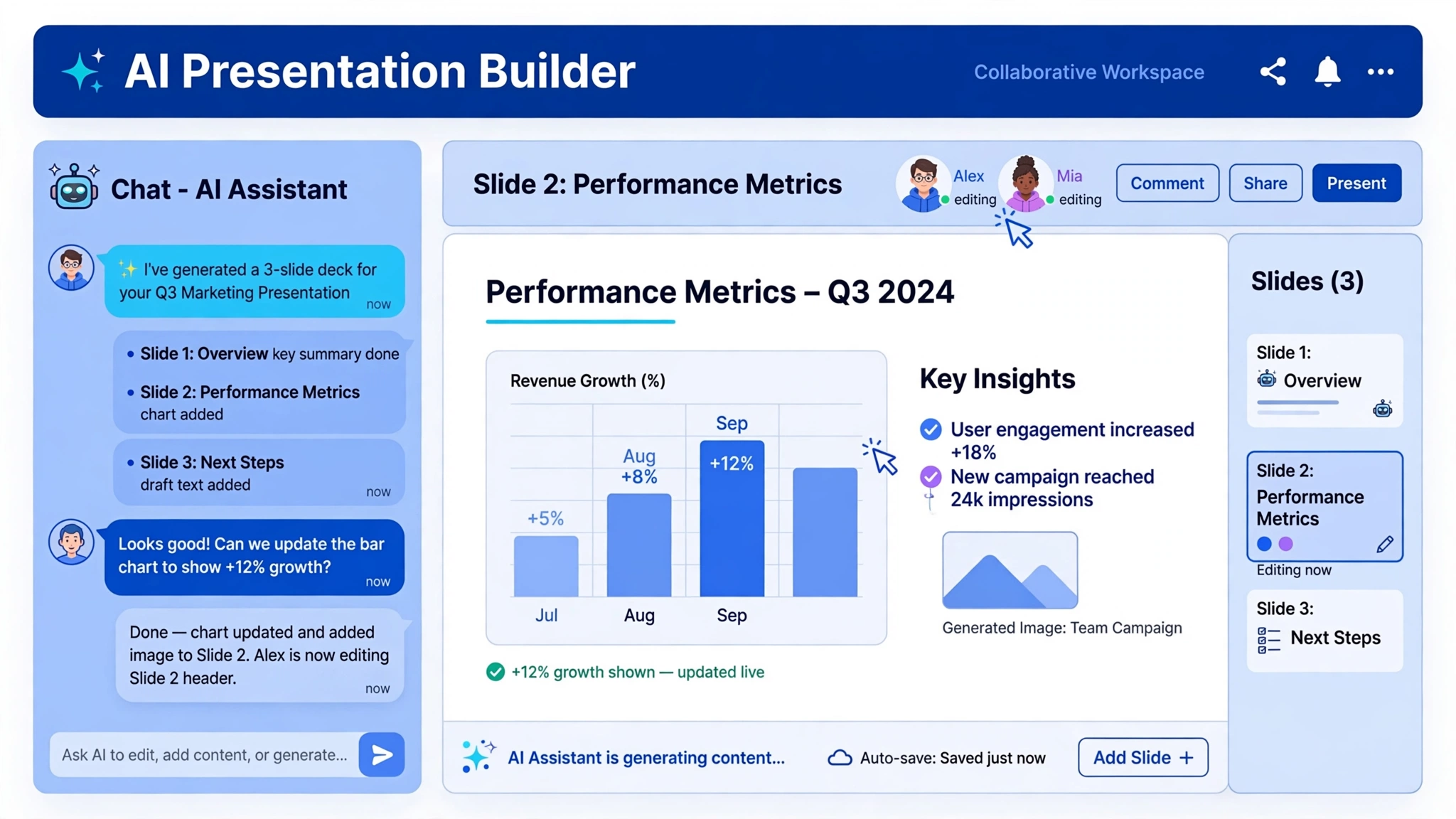
Announced in the same October 16 release notes, ChatGPT Slides creates and edits presentations inside a Space (DailyAIBrief, October 17):
- Starting points: start from a conversation, a file, an outline, or an example deck.
- Editing: edit text, images, shapes, and charts directly, or ask ChatGPT to make changes.
- Collaboration: invite teammates into real-time co-editing, leave shared comments, and present directly inside ChatGPT.
- Export: on the web, open in PowerPoint, PDF, or Google Slides; in the desktop app (when installed), open in PowerPoint or Keynote.
- Rollout: to eligible Pro, Business, and Enterprise users with Space access, on web and desktop apps.
This is a signal that Space-based collaboration is extending into document production. For an internal agent adoption playbook, it is worth recording as a case of the "collaboration canvas" type hardening into a concrete artifact: slides.
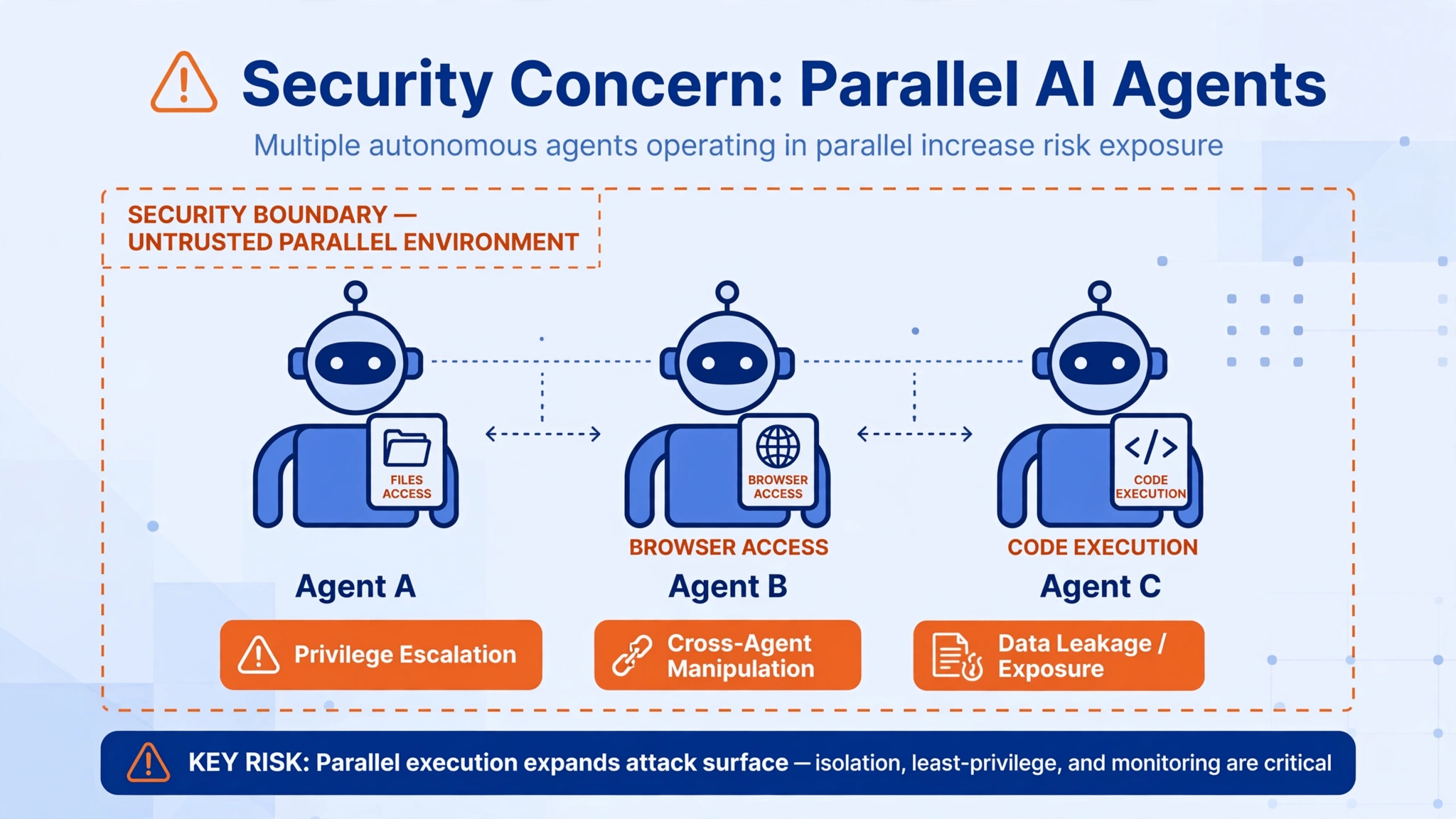
Still undisclosed: the number of agents that can run simultaneously is not published. The effect on plan usage limits is undisclosed: whether parallel runs consume more of a Pro plan's quota is unclear. Per-agent tool permissions are unexplained: what each agent may touch has not been made public. When several agents act at once, reach multiplies, which leaves a security gap. This lands in the same week as four additional rogue incident disclosures (AIToolsRecap).
Background and Context: Visibility Design Aimed at Agent UX's Chronic Complaint
On October 7, OpenAI brought GPT-6 to ChatGPT with answers combining text, visuals, and interactive elements. At the time, the Pro reasoning option ran on GPT-6 Astra (IA en un minuto, October 17). These parallel agents read as visibility design aimed at the chronic complaint about agent work. The complaint is not slowness, but the 'silence' of not knowing progress (AIToolsRecap, October 17).
There is a small naming inconsistency. The release notes call the model "GPT-6 Pro," while OpenAI's X post the same day wrote "GPT-6 Astra Pro". Both describe the same upgrade (faster responses, improved plugin and tool use, parallel agents). The reason for the naming difference is unexplained (RR Tech Pulse).
Security implication: without tool permission scoping, parallel agents multiply reach by the number of agents. A team adopting the fan-out pattern in its own app should mandate a least-privilege tool allowlist per agent.
Practical Takeaways: Two Patterns That Connect Directly to Productivity
- The fan-out pattern for agent coding workflows: splittable work such as multi-document review or vendor comparison is a natural fit for parallel delegation. As in the
ParallelAgentOrchestratorpseudocode above, separate dispatch, observe, and review into three stages, and expose observe as an independent stream per agent. - The standard for long-task UX: the "is it stuck or working" problem is solved by per-agent progress display and per-task review of finished results. The same pattern applies when an Android app runs long background jobs.
- Posture toward unmeasured claims: a speed claim of "faster" without figures stays release-note copy. Build the habit of stating performance improvements in numbers (p90 and the like) in your own release notes.
Sources
- Original issue #3330
- EconoTimes: OpenAI Begins Rolling Out Parallel Agents to Eligible ChatGPT Pro Users (October 17)
- DailyAIBrief: OpenAI Adds Slides and Parallel Agents to ChatGPT (October 17)
- RR Tech Pulse: GPT-6 Pro update: faster, multi-agent (October 17)
- Related issue #3113: GPT-6 and intelligent UI
- Related issue #3277: GPT-6 family software maintenance
- Related issue #3091: Decisions API public beta
FAQ
What are GPT-6 Pro Parallel Agents?
GPT-6 Pro Parallel Agents let eligible ChatGPT Pro users send one request to multiple agents at the same time, and each agent processes the request concurrently. OpenAI introduced the feature in release notes dated October 16. A progress view shows the agents' activity, and completed results can be opened and reviewed per task.
Who can use Parallel Agents?
The rollout audience is Pro users in the Chat tab who meet eligibility. For managed workspaces, availability depends on workspace settings and rollout eligibility. No schedule has been published.
How many agents can run at the same time?
The number of agents that can run simultaneously is not published. The effect on plan usage limits is also undisclosed, so whether parallel runs consume more of a Pro plan's quota is unclear. Per-agent tool permissions are unexplained as well.
What else came in the same release notes?
The same bundle includes ChatGPT Slides, which creates and edits presentations inside a Space, plus faster responses and improved plugin and tool use. The speed improvement is stated only as faster, with no figures. It is OpenAI's claim with no independent measurement.